In a direct response to the capital's deteriorating air quality, the Aam Aadmi Party (AAP) staged a significant protest on Monday, December 30, 2025. The demonstration took place at the Ghazipur toll plaza, with party members demanding its immediate shutdown, citing its contribution to the city's severe pollution crisis.
Protest Grounded in Supreme Court Directive
The political action is not without legal context. It follows a Supreme Court order issued on December 17, which directed the Municipal Corporation of Delhi (MCD) to reach a decision within one week. The court's instruction pertained to the potential temporary closure of the nine toll plazas operated by the civic body. The primary objectives outlined were to facilitate smoother traffic movement and, critically, to reduce harmful vehicular emissions that choke the city.
Political Standoff and Official Response
Addressing the protestors' demands, Delhi Mayor Raja Iqbal Singh offered a clarifying counterpoint. He stated that the Supreme Court had not issued any direct mandate to close the toll plazas. "At the same time," the Mayor added, "the civic body has duly submitted an affidavit before the Supreme Court, providing details of all the steps being taken in this regard." This response underscores the procedural gap between the court's suggestion for a review and the AAP's call for immediate action.

Meanwhile, the opposition within the MCD voiced a more urgent stance. Ankush Narang, the Leader of Opposition in the MCD, argued forcefully for the cessation of toll collections. "On behalf of the AAP, we demand that toll tax plazas be shut down with immediate effect and that such collections be stopped," Narang declared. He pointed to the political landscape, noting, "Today, Delhi has a so-called 'four-engine' BJP government, so there is no shortage of funds for them. This revenue can be taken from the Delhi government or even the Central government, but the lives of the people are far more important."
A Broader Battle Against Smog
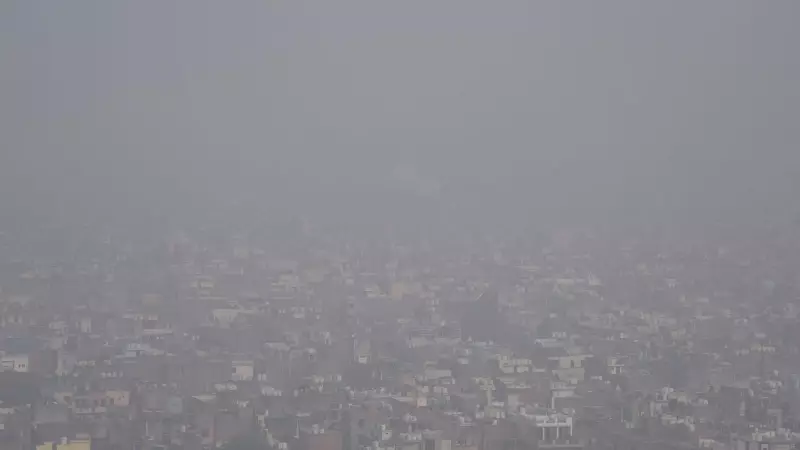
This protest unfolds against a grim backdrop of dense smog consistently enveloping New Delhi, a visual testament to the public health emergency. The AAP's move strategically links a specific infrastructural point—the toll plaza—to the larger, visceral issue of breathable air. By focusing on Ghazipur, a known traffic bottleneck, the party aims to translate public frustration over pollution into tangible political pressure, challenging the administrative response of the BJP-led civic bodies.
The standoff highlights the complex interplay between judicial directives, municipal governance, and political activism in India's struggle against environmental degradation. While the Supreme Court set the stage for a review, the AAP is pushing for a definitive and swift action, framing the toll plazas not just as revenue collection points but as active contributors to the capital's toxic air.