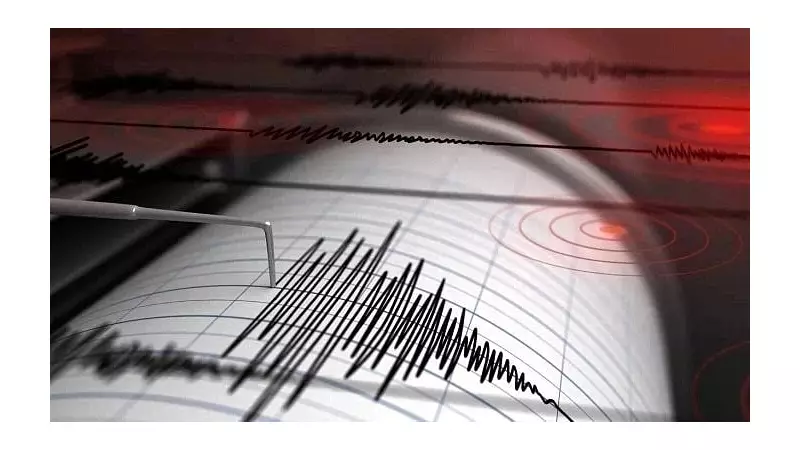
An earthquake measuring 4.1 on the Richter scale jolted Gujarat's Kutch district in the early hours of Friday. The tremor occurred at 1.22 am, according to official reports.
Epicentre and Depth Details
The Institute of Seismological Research (ISR) in Gandhinagar confirmed the seismic event. They pinpointed the epicentre approximately 55 kilometres north northeast of Khavda within the district.
The quake originated at a depth of 12 kilometres. Its geographical coordinates were recorded at 24.02 degrees North latitude and 69.76 degrees East longitude.

No Casualties or Damage Reported
Local authorities have confirmed no casualties from the earthquake. Preliminary assessments indicate no significant damage to property or infrastructure either.
Residents in the area felt mild shaking but reported no immediate concerns. The tremor lasted for a few seconds, causing brief alarm among some inhabitants.
Seismological Monitoring and Alerts
The National Center for Seismology (NCS) promptly shared details about the earthquake on social media. They posted precise data including magnitude, time, and location.
Their tweet encouraged people to download the BhooKamp app for real-time earthquake information. This app provides alerts and safety guidelines during seismic events.
Scientists at ISR continue to monitor aftershocks, though none have been reported so far. They emphasize that Kutch remains a seismically active zone requiring constant vigilance.
Historical Context of Seismic Activity
Kutch district has experienced several earthquakes in the past due to its location. The region lies in a high-risk seismic zone according to geological surveys.
The 2001 Bhuj earthquake, a devastating event, remains fresh in public memory. It caused widespread destruction and loss of life across Gujarat.
Since then, authorities have strengthened building codes and disaster preparedness measures. Regular drills and public awareness campaigns help mitigate risks.
Official Response and Preparedness
State disaster management teams were immediately alerted after the tremor. They conducted rapid assessments in vulnerable areas to ensure safety.
Officials urge residents to stay calm and follow standard earthquake safety protocols. These include dropping, covering, and holding on during tremors.
The government maintains that robust monitoring systems provide early warnings. They assure the public that response mechanisms are fully operational.
This incident highlights the importance of continuous seismic monitoring in prone regions. It serves as a reminder for communities to remain prepared for natural disasters.