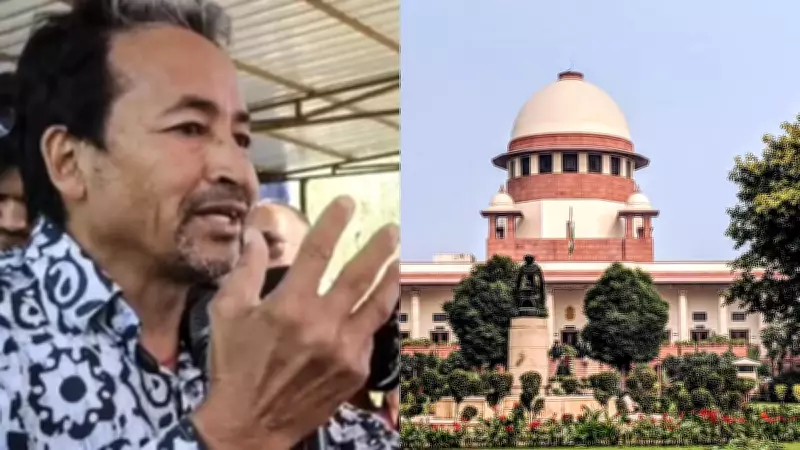
Sonam Wangchuk's Legal Team Challenges Allegations in Supreme Court Hearing
In a significant development before the Supreme Court of India, the legal representatives of environmental activist and innovator Sonam Wangchuk have categorically denied allegations that he made remarks advocating for the overthrow of the government, drawing comparisons to the Arab Spring uprisings. The hearing, which took place recently, saw senior advocate Kapil Sibal presenting arguments on behalf of Wangchuk's wife, Gitanjali Angmo, before a bench comprising Justices Aravind Kumar and P B Varale.
Selective Video Evidence Alleged by Defense
During the proceedings, Kapil Sibal submitted a crucial argument to the bench, asserting that law enforcement agencies have relied on a selective and potentially misleading video clip to build their case against Wangchuk. Sibal contended that this video evidence was presented in a manner that could mislead the detaining authority, thereby casting doubt on the validity of the allegations. He emphasized that the context and full scope of Wangchuk's statements were not adequately represented, leading to a misinterpretation of his intentions.
Background of the Case and Legal Implications
The allegations against Sonam Wangchuk stem from claims that he made inflammatory comments during public addresses, suggesting a desire to incite mass movements similar to the Arab Spring, which involved widespread protests and regime changes in several Middle Eastern countries starting in 2010. Wangchuk, known for his work in education and environmental conservation in Ladakh, has been a vocal advocate for regional autonomy and sustainable development. His legal team's denial in the Supreme Court marks a pivotal moment in this high-profile case, as it challenges the basis of the charges and seeks to clarify his stance on governance and dissent.
Key Points from the Hearing:
- Kapil Sibal argued that the police used a selective video to misrepresent Wangchuk's remarks.
- The bench of Justices Aravind Kumar and P B Varale heard the submissions attentively.
- Wangchuk's wife, Gitanjali Angmo, is directly involved in the legal proceedings.
- The case highlights issues of free speech, evidence integrity, and legal accountability in India.
Wider Context and Public Reaction
This Supreme Court hearing has garnered significant attention across India, given Sonam Wangchuk's prominence as a social activist and the sensitive nature of the allegations. Supporters of Wangchuk argue that the charges are politically motivated and aim to silence his advocacy for Ladakhi rights and environmental causes. Conversely, authorities maintain that the allegations are based on credible evidence and necessary for maintaining public order. The outcome of this legal battle could set important precedents for how dissent and activism are treated under Indian law, particularly in regions with ongoing political tensions.
As the case progresses, further hearings are expected to delve deeper into the evidence and legal arguments presented by both sides. The Supreme Court's decision will be closely watched by legal experts, activists, and the general public alike, as it touches upon fundamental rights and the rule of law in the world's largest democracy.