Venezuela's Interim Leader Acts to Secure Power After Maduro's Capture
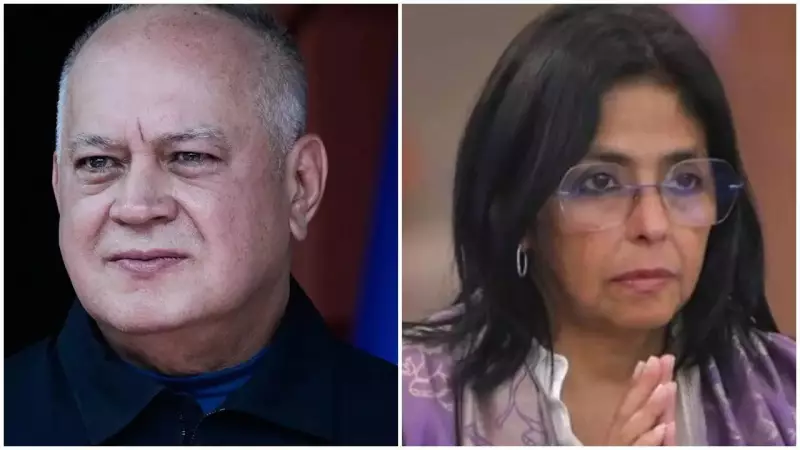
In the twelve days following the United States' seizure of Venezuelan President Nicolas Maduro, interim President Delcy Rodriguez has worked aggressively to consolidate her authority. She installed trusted allies in critical government roles to shield herself from internal challenges. One prominent figure she must contend with is Interior Minister Diosdado Cabello.
Rodriguez's Strategic Appointments
A recent Reuters investigation sheds light on Cabello's connections with American authorities and Rodriguez's determined efforts to fortify her position. Rodriguez, a 56-year-old technocrat known for her quiet yet rigorous approach, previously served as vice president and oil minister. She appointed a central banker to assist with economic management, selected a new presidential chief of staff, and named a fresh leader for Venezuela's feared DGCIM military counterintelligence agency.
This agency was developed over many years with Cuban support. Major General Gustavo Gonzalez, aged 65, now commands the DGCIM. Three government insiders described this move as Rodriguez's initial maneuver to address what many Venezuelans view as the primary danger to her leadership: Diosdado Cabello.

The Cabello Challenge
Cabello serves as Venezuela's hardline interior minister. He maintains close relationships with security forces and the notorious "colectivos" motorcycle gangs, which have been implicated in attacks on opposition supporters. "She is very clear that she doesn't have the capacity to survive without the consent of the Americans," stated one source close to the government. "She's already reforming the armed forces, removing people and naming new officials."
Interviews with seven sources within Venezuela, including diplomats, business leaders, and politicians, exposed previously unreported details about the fundamental rift within Venezuela's government. This division poses significant risks for Rodriguez as she attempts to strengthen internal control while adhering to Trump administration directives on oil sales. The sources requested anonymity due to fears of retaliation.
Walking a Political Tightrope
Rodriguez's delicate balancing act became evident during her first major speech since assuming office. Speaking to parliament in a national annual address on Thursday, she appealed for unity, emphasized her loyalty as Maduro's former deputy, and promised to open a new political chapter for Venezuela with enhanced oil investment.
Venezuela's communications ministry, which manages all press inquiries for the government and its officials, did not reply to a request for comment on this story. The White House responded to Reuters' emailed questions by directing the news agency to recent statements from former President Trump. In a Wednesday interview with Reuters, Trump remarked that Rodriguez "has been very good to deal with" and anticipated her visiting Washington at some point.
Rodriguez, nicknamed "the tsarina" for her extensive business networks, wielded considerable influence over the country's civilian power structures, including the vital oil industry. She now also benefits from United States backing. This support seemed reinforced on Thursday when Rodriguez met with CIA director John Ratcliffe in Caracas.
Cabello's Power Base
The opposing faction is led by Cabello, who also chairs the ruling PSUV socialist party. A former soldier, Cabello hosts a weekly four-hour program on state television that has aired for twelve years. His first public appearance after Maduro's capture featured him on screen wearing a flak jacket and surrounded by armed guards, leading a chant of, "To doubt is to betray."
Four sources familiar with the situation informed Reuters that officials in the Trump administration contacted Cabello months before the operation to capture Maduro and have continued communicating with him since. They cautioned him against employing security services or colectivos to target opposition members.
Cabello, who was imprisoned in Venezuela for supporting eventual socialist President Hugo Chavez during a failed 1992 coup, faces indictment in the United States. A $25 million reward exists for his capture.

Surface Unity and Underlying Tensions
Thus far, Cabello has shown a conciliatory attitude toward Rodriguez, claiming they are "very united." He attended Thursday's national address alongside Rodriguez and her brother Jorge, who leads the national assembly. However, sources knowledgeable about their relationship told Reuters that Cabello remains the greatest threat to Rodriguez's governance capabilities.
In Caracas, security forces appeared nervous. A few hours after Rodriguez's swearing-in, a brief burst of anti-aircraft fire occurred outside the presidential palace. Some feared another US attack, but reports indicated it resulted from miscommunication between police and the presidential guard, which shot down police drones. The government labeled the craft as spy drones without specifying their origin.
National Uncertainty and Economic Struggles
Across Venezuela, citizens grappled with the shock of Maduro's capture, uncertain whether to feel hopeful or frightened. In some areas, local socialist party branches instructed members to spy on neighbors and report anyone celebrating Maduro's downfall, according to three party members who spoke anonymously.
Within this tense atmosphere, Rodriguez must convince party loyalists that she is not a US puppet who betrayed Maduro. She also needs to stabilize an economy where prices for basic goods skyrocketed after the US attack. Additionally, she must gain some control over the extensive military-linked patronage networks that evolved during decades of Chavismo rule.
Venezuela boasts as many as 2,000 generals and admirals, more than double the number in the United States, a military superpower with twenty times the active duty and reserve troops. Senior and retired officers oversee food distribution, raw materials, and the state oil company PDVSA, while dozens of generals sit on private company boards.
Many officials manage their regional domains autonomously, ordering patrols or checkpoints by soldiers under their command. Since Maduro's capture, certain parts of the country and the capital Caracas have witnessed increased security service activity.
Gonzalez's Complex Role
Gonzalez, the new head of the DGCIM, collaborated closely with Cabello throughout his lengthy government career, especially during two periods leading the separate civilian spy agency. Yet Gonzalez owes his most recent appointments to Rodriguez. In 2024, Rodriguez selected Gonzalez for a senior position at the state oil company, Venezuela's most crucial enterprise and the driver of its economy.
Questions persist about how much authority Gonzalez can exercise over the DGCIM. The three government sources indicated that Cabello's allies within the agency might undermine him. One source familiar with security service operations noted that Gonzalez's predecessor, General Javier Marcano, struggled to control the agency.
"The role of boss of repression already has a name… Diosdado," this person said. "Marcano was coordinating with (civilian) militias and with the colectivos, but he had serious difficulties controlling DGCIM because his designation was nominal."
Reuters could not contact Marcano directly. All formal communication with Venezuelan officials is processed through the communications ministry, which did not answer a list of questions related to this report.
Potential for Disruption
The colectivos, closely linked to Cabello, could render the country ungovernable by executing a so-called "anarchization" strategy. Originally devised to deter US intervention, this strategy might now target Rodriguez, according to the source close to the government. It would mobilize intelligence services and colectivos to plunge Caracas into disorder and chaos.
Cabello could also decelerate the pace of prisoner releases praised by Trump. These releases have progressed much slower than demanded by families and rights groups, creating a potential pressure point for Rodriguez.
Mounting External Pressure
Outside Venezuela, pressure on Cabello continues to intensify. "For the Trump administration to achieve a real transition in Venezuela, sooner or later Diosdado Cabello must face U.S. justice," US Representative Maria Elvira Salazar posted on X this month. "When Diosdado is brought to justice, it will be a decisive step toward a democratic transition in Venezuela and the release of all political hostages."