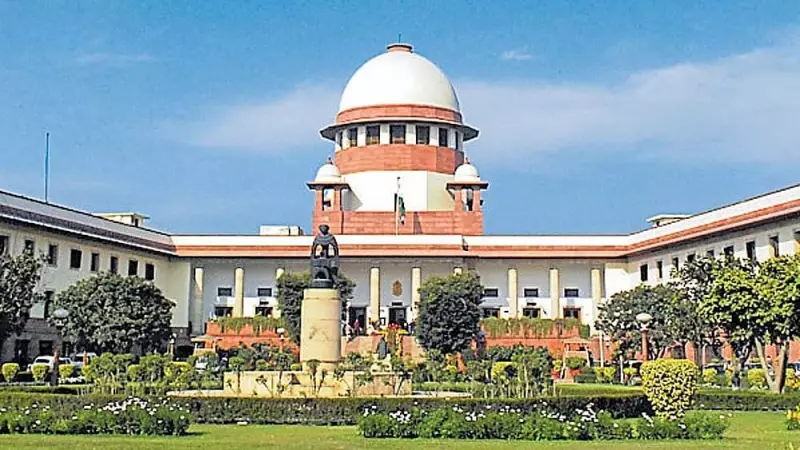
A profound and unsettling trend is emerging within the hallowed halls of India's Supreme Court: the gradual fading of dissenting voices. The year 2024 has brought this issue into sharp focus, revealing a judiciary where concurrence is becoming the overwhelming norm, raising critical questions about the health of judicial independence and democratic discourse.
The Stark Numbers: A Statistical Portrait of Declining Dissent
The data paints a clear and concerning picture. An analysis of judgments delivered by the Supreme Court of India reveals a dramatic fall in the number of dissenting opinions. In the period from 2004 to 2014, dissenting judgments were a more common feature. However, a sharp decline began around 2015-16. The trend has become particularly pronounced in recent years.
For instance, in the first three months of 2024, the Supreme Court delivered a staggering 291 reported judgments. Out of these, only one contained a noted dissent. This solitary dissenting voice came from Justice B.V. Nagarathna in a case related to the interpretation of the Insolvency and Bankruptcy Code. This statistic is not an anomaly but part of a pattern. The court's output for the entire year of 2023 saw dissents in merely 1.27% of its rulings.
This decline is especially visible in Constitution Bench judgments, which deal with the most significant legal and constitutional questions. Historically, such benches were arenas for vigorous debate. Today, they frequently deliver unanimous verdicts, a shift that legal scholars and observers find worthy of deep scrutiny.
Unpacking the Causes: Why Are Dissenting Voices Fading?
Several interconnected factors are believed to be contributing to this decline in judicial dissent. Experts point to a combination of institutional practices and external pressures.
The role of the Chief Justice of India (CJI) is central to this discussion. The CJI, as the 'master of the roster,' holds exclusive power to constitute benches and assign cases. This immense administrative authority can influence which judges hear which cases together. There is a growing perception that benches are sometimes composed in a manner that minimizes the likelihood of disagreement, especially in politically sensitive matters.
Furthermore, the preference for unanimity is seen as a driving force. A unanimous judgment from a multi-judge bench carries immense weight and is seen as presenting a strong, unified front of the judiciary. The pursuit of this unanimity may sometimes come at the cost of individual judges expressing their independent, contrary views, even if they hold them strongly.
Another significant factor is the fear of reprisal or sidelining. Judges who frequently author dissents, particularly in high-profile cases, may face informal consequences. They might be perceived as 'troublesome' and could be assigned to less significant benches or cases, a practice often referred to as 'benching.' This creates a chilling effect, discouraging judges from voicing disagreement.
The High Cost of Silence: Implications for Democracy and Law
The erosion of dissent within the Supreme Court is not a mere procedural curiosity; it has profound consequences for Indian democracy and the evolution of law.
Firstly, dissent is the lifeblood of a dynamic legal system. A dissenting opinion is not a failure of consensus but a vital contribution to legal thought. It preserves an alternative interpretation for future consideration. History shows that many powerful dissents have later become the law of the land, guiding society toward greater justice. Their absence stunts the organic growth of jurisprudence.
Secondly, it weakens public confidence in judicial independence. When the court consistently speaks with one voice, especially on matters with political ramifications, it can fuel perceptions of executive influence or a lack of robust internal debate. The judiciary's strength lies in its perceived neutrality and fearless application of the law, qualities embodied by the courage to dissent.
Finally, it represents a loss of rich, deliberative democracy within the institution itself. A dissenting opinion forces the majority to refine and strengthen its reasoning. It ensures that multiple perspectives are thoroughly examined before a final decision is etched into legal history. Without this internal challenge, judgments may become less rigorous and more susceptible to groupthink.
The vanishing act of dissenting voices in the Supreme Court is a silent alarm for India's democratic framework. While efficiency and unanimity have their place, they must not eclipse the foundational principles of independent judicial reasoning and the courageous expression of minority viewpoints. The health of the nation's democracy is, in no small measure, reflected in the robustness of debate within its highest court.