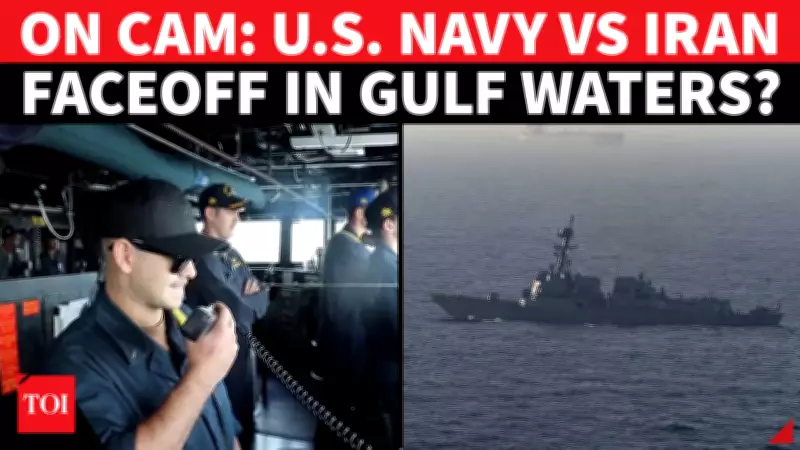
U.S. Navy Enforces Blockade on Iran with Direct Warning to Ships in Gulf of Hormuz
The United States Central Command has made a significant move by releasing compelling audio of a real-time warning broadcast by the United States Navy, as it rigorously enforces a comprehensive blockade targeting Iran. This development underscores escalating tensions in the strategically vital Gulf of Hormuz, a key global oil transit route.
Dramatic Audio Reveals Clear U.S. Position
In the message transmitted at sea on Wednesday, U.S. forces left no room for ambiguity, stating emphatically: “The U.S. has announced a formal blockade of Iranian ports in coastal areas. This is a legal action. All vessels are advised to immediately return to port if leaving and discontinue transit to Iran if that is your next port of call.” This direct communication aims to prevent any maritime traffic from defying the blockade, highlighting the seriousness of the U.S. stance.
Context and Implications of the Blockade
The blockade represents a major escalation in U.S.-Iran relations, with the Gulf of Hormuz being a critical chokepoint for international shipping. By implementing this measure, the U.S. seeks to exert pressure on Iran amid ongoing geopolitical disputes. The warning serves as a proactive measure to ensure compliance and avoid potential confrontations at sea.

This action follows a series of regional tensions and aligns with broader U.S. strategic interests in the Middle East. The release of the audio by Central Command is intended to demonstrate transparency and deterrence, signaling to both allies and adversaries the U.S. commitment to enforcing maritime security protocols.
Global Reactions and Maritime Safety Concerns
As the situation unfolds, global observers are closely monitoring the impact on international trade and naval operations. The warning emphasizes the legal basis of the blockade, aiming to legitimize the U.S. position while urging vessel operators to prioritize safety by altering their routes immediately.
This development could have far-reaching consequences for shipping lanes and regional stability, with potential ripple effects on oil prices and diplomatic relations. The U.S. Navy's proactive approach underscores the high stakes involved in maintaining control over such a pivotal maritime corridor.