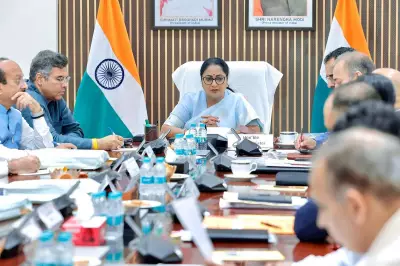
Uttar Pradesh's Law & Order Transformation: From Unease to Assurance
There was a period when the phrase "law and order in Uttar Pradesh" evoked a sense of unease rather than assurance. Policing was often reactive, deterrence was uneven, and for many residents—especially women—public spaces carried an unspoken caution. Over the past nine years, however, this landscape has undergone a structural reset, driven by governance capacity, administrative intent, and a surge in public confidence.
Zero-Tolerance Approach to Crime
At the core of this transformation lies a clear principle: law and order is not an abstract administrative goal but the foundation of credible governance. Under Chief Minister Yogi Adityanath, this principle has been implemented with clarity through a zero-tolerance approach to crime. A major shift has been the dismantling of organised crime networks that once operated with relative impunity.
Through strict enforcement of laws such as the Gangster Act and the National Security Act (NSA), along with aggressive asset seizure, the state has not only disrupted criminal enterprises but altered the cost-benefit calculus of crime. Properties worth hundreds of crores linked to criminal syndicates have been attached or demolished, sending a clear message that illegality will not pay.

Mission Shakti: A Benchmark for Women's Safety
The true test of law and order lies in how safe the most vulnerable feel, with women's safety serving as the most credible benchmark. Recognising this, the state launched Mission Shakti, a comprehensive initiative focused on women's safety, dignity, and self-reliance. It brings together nearly 15 departments, making it a coordinated governance intervention rather than a standalone policing effort.
A key step under Mission Shakti Phase V was taken in September 2025, when dedicated Mission Shakti Kendras were established in every police station. Staffed by trained personnel, these centres are designed to address women's concerns with sensitivity. Their role goes beyond complaint registration; they act as a single point of support, offering legal aid, counselling, and institutional assistance from the first report to the conclusion of legal proceedings.
Significant Crime Reduction and Increased Representation
The early results of this intervention are significant. Comparing the three months before the Kendras became operational (June 16 to September 15, 2025) with the three months after (September 16 to December 15, 2025), key crime indicators show a notable decline:
- Cases of rape fell by 33.92%
- Abduction of women and children decreased by 17.03%
- Dowry deaths dropped by 12.96%
- Domestic violence cases reduced by 9.54%
These figures underline the impact of structural reforms. Another important dimension is the rise in women's representation in the police force. From 13,842 women personnel in 2017, the number has increased to 44,426 in 2026—an addition of over 30,500. This has strengthened both operational capability and public confidence. Combined with measures like Anti-Romeo squads, it has improved safety perceptions across urban and rural areas.
Social Shift: Confidence and Opportunity
Beyond policy and policing, the most visible change is social. In districts once considered sensitive, young women are now commuting independently, pursuing education, running enterprises, and participating in local governance. The shift is not just about safety, but about confidence and opportunity, marking a new era for Uttar Pradesh's law and order landscape.