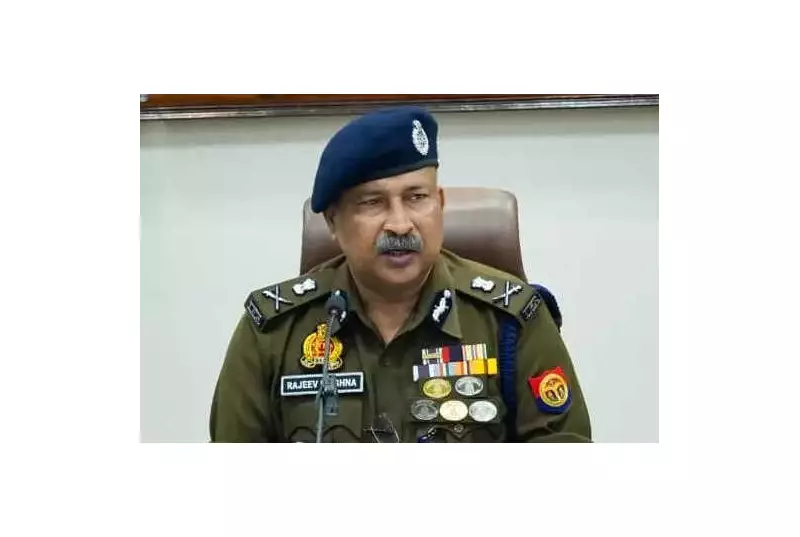
In a significant move to modernize and strengthen law enforcement, the Uttar Pradesh Police has concluded a pivotal two-day conference, charting a detailed roadmap for the coming years. Director General of Police (DGP) Rajeev Krishna announced that the conference yielded a concrete action plan built around ten priority discipline pillars, which will form the core of the state's policing strategy.
Training, Cyber Capabilities, and Infrastructure Take Centre Stage
DGP Krishna emphasized that training will remain the central focus for the force. The department's action plan is set to be finalized by the 1st of the coming month. "After initial training, output of personnel will be assessed, and further training will be conducted for all newly launched initiatives," he stated. Field-level disaster management programs will also be strengthened.
On the critical front of cyber policing, the DGP outlined a multi-level capacity-building rollout. Additional legal and procedural training modules are being prepared. Three flagship initiatives will be expanded: a special centre programme, a comprehensive cyber exercise programme, and a road-accident response and prevention drive.

"We are also preparing a plan to develop infrastructure to tackle cybercrime and to enable the effective use of cyber tools and artificial intelligence," Krishna said, with the objective of making Uttar Pradesh a leading state in combating such offences. He noted that UP is already among the few states with cyber help desks functional at the police station level.
Forensic Labs, New Laws, and Manpower Boost
Aligning with the new criminal laws, which mandate 100% forensic examination in cases with punishment exceeding seven years, the DGP detailed UP's ambitious plan. The state aims to achieve full compliance ahead of the national timeline, targeting completion within one year. Currently, 16 forensic laboratories are operational, with evidence-collection units established in every district.
Regarding manpower, following the induction of approximately 60,000 new personnel, work has begun on improving barracks and related facilities. The department is confident that with these recruits and upgraded infrastructure, public service delivery will become more effective.
Review of Key Policing Verticals and Tech Roadmap
The conference sessions extensively covered crime against women and children, police station management, and infrastructure upgradation. On prosecution, DGP Krishna noted that Uttar Pradesh performs strongly in prosecution outcomes and that provisions of the new criminal laws have been substantially incorporated at the district level.
On the technology front, discussions were held on the next phase of the Crime and Criminal Tracking Network and Systems (CCTNS). CCTNS-2 is expected by March, and preparations will begin in advance with participation from central agencies like the NCRB. The DGP concluded that the conference provided a comprehensive platform to review current work and strategize for a more robust and tech-enabled Uttar Pradesh Police.