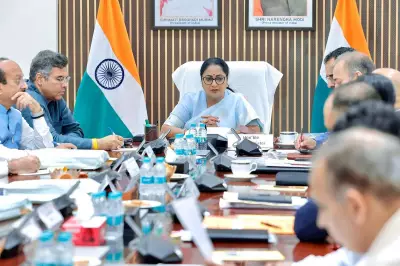
The two-day state-level senior police officers' conference, Police Manthan 2025, wrapped up on Sunday at the Uttar Pradesh Police Headquarters in Lucknow. The event featured intensive discussions and presentations aimed at tackling the state's most pressing internal security and policing challenges.
Focus on Disasters and Crowd Management
On its final day, the conference organized four critical thematic sessions. These focused on emerging risks, technological solutions, and best practices to strengthen law and order, public safety, and disaster preparedness across Uttar Pradesh.
Session eight tackled disaster management, civil defence, and home guards. A panel led by nodal officer DK Thakur, the Director General of Civil Defence and UPSSF, presented a thorough analysis of risks stemming from climate change, rapid urbanisation, high population density, and the rising frequency of both natural and man-made disasters.

The panel emphasised the implementation of the Incident Command System (ICS) in Uttar Pradesh. This system is designed to ensure effective disaster response, maintain law and order, manage crowds and traffic, and safely evacuate people during emergencies. The crucial frontline role of civil defence and home guards was highlighted.
Session nine delved into large crowd management, presented by a panel led by Praveen Kumar, Inspector General of the Ayodhya Range. This session examined the unique challenges of managing massive religious, cultural, and political gatherings.
Officers were briefed on the use of artificial intelligence-based tools like crowd density analysis, geo-tagged sequential parking systems, predictive analytics, digital dashboards, drone surveillance, and physics-based simulations. The panel noted these technologies help authorities anticipate crowd behaviour, plan proactively, respond swiftly to emergencies, and ensure orderly evacuations.
Combating Digital and Organised Crime
Session ten concentrated on intelligence and emerging threats. Led by Additional Director General of Police (Intelligence) Bhagwan Swaroop, the panel discussed challenges from the misuse of social media. These included misinformation campaigns, deepfakes, dark web activities, and the online presence of terrorist networks. The session also included a detailed discussion on organised religious conversion activities. Measures to counter social media threats, strengthen intelligence gathering, and enhance future preparedness were outlined.
Session 11 addressed anti-terror operations, narcotics, cattle theft, and other organised crimes. A panel led by Additional Director General of Police (Law and Order) Amitabh Yash analysed new dimensions of terrorism linked to international borders with Pakistan, Bangladesh, and Nepal.
The presentation stressed the need to strengthen international border surveillance and highlighted using advanced technologies like AI and financial trail analysis to curb internationally funded religious conversion rackets. Efforts and future strategies to tackle the complex challenges of narcotics trafficking and substance abuse were also discussed.
Showcasing Innovation and Best Practices
An additional session showcased innovative best practices adopted by various police units across the state. Presentations included:
- Innovations by the Government Railway Police.
- The Police Inventory Management System introduced by Agra Traffic Police.
- Bail guarantor verification in Bhadohi.
- Operation Jagriti in Kasganj.
- Database-based performance ranking of gazetted officers in rural Saharanpur.
- The innovative use of Section 107 of the Bharatiya Nyaya Sanhita in rural Aligarh.
The conference concluded with a collective emphasis on technology-driven policing, intelligence-led operations, and institutional innovation. This unified approach aims to address Uttar Pradesh's evolving security challenges and improve public service delivery across the state.