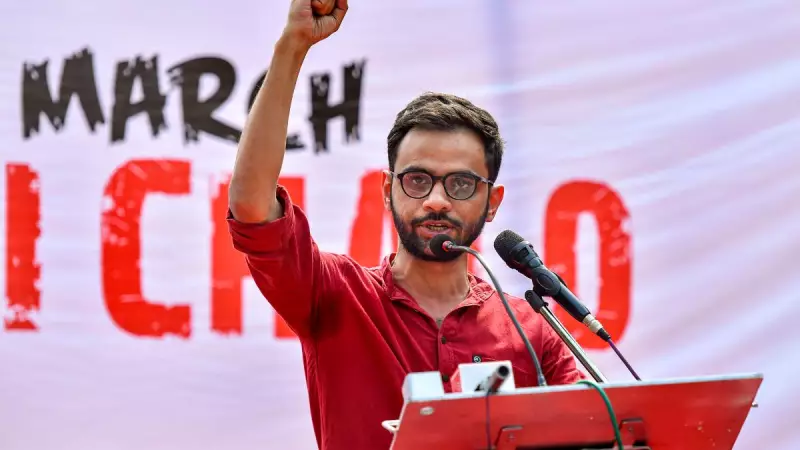
The Supreme Court of India delivered a significant blow to activist Umar Khalid on Monday, January 5, 2026, by rejecting his bail application in a case related to the larger conspiracy behind the 2020 Delhi riots. The bench, comprising Justices Bela M. Trivedi and Satish Chandra Sharma, upheld the earlier decisions of the trial court and the Delhi High Court, which had also denied him relief.
A Life Behind Bars: The Legal Journey
Umar Khalid has been in judicial custody since September 2020, booked under the stringent Unlawful Activities (Prevention) Act (UAPA) and other sections of the Indian Penal Code. The charges allege his involvement in a pre-meditated conspiracy that led to the communal violence in northeast Delhi in February 2020. Following the Supreme Court's verdict, Khalid was seen making a brief but powerful statement to the media as he was being taken back to prison.
"Ab yahi zindagi hai," he said, which translates to "This is life now." This remark encapsulates the grim reality of his prolonged incarceration without a trial conclusion. His legal team had vehemently argued for bail, citing the protracted nature of the proceedings and the right to a speedy trial.
The Supreme Court's Reasoning and the Prosecution's Stance
The apex court, after a detailed hearing, found no grounds to interfere with the lower courts' orders. The bench concurred with the findings that prima facie allegations against Khalid were serious in nature. The prosecution, represented by the Delhi Police, had opposed the bail plea, contending that Khalid was a key conspirator. They presented evidence, including speeches and alleged connections, to argue that his actions were part of a plot to destabilize the nation.
The court's decision reinforces the high threshold for granting bail under the UAPA, where the presumption against bail is significantly stronger compared to ordinary penal laws. This aspect of the anti-terror law has been a central point of debate in this and similar cases.
Reactions and the Path Ahead
The denial of bail has drawn mixed reactions. Supporters and civil rights groups have expressed deep disappointment, viewing it as a continuation of the activist's prolonged detention. They argue that the case highlights the challenges of securing bail under laws like UAPA, even before guilt is proven. Conversely, those backing the prosecution see the verdict as a necessary step in ensuring a thorough investigation into a serious case of communal violence.
For Umar Khalid, the immediate future means a return to jail as the trial continues. His legal team may explore further legal avenues, but options are narrowing. The trial in the Delhi court is expected to proceed, though its pace remains a critical concern. The activist's succinct statement, "Ab yahi zindagi hai," echoes the sentiment of many undertrials in similar situations, awaiting their day in court while life passes by within the confines of a prison cell.
The case continues to be a focal point in discussions on India's legal process, the application of anti-terror legislation, and the delicate balance between national security concerns and individual liberty.