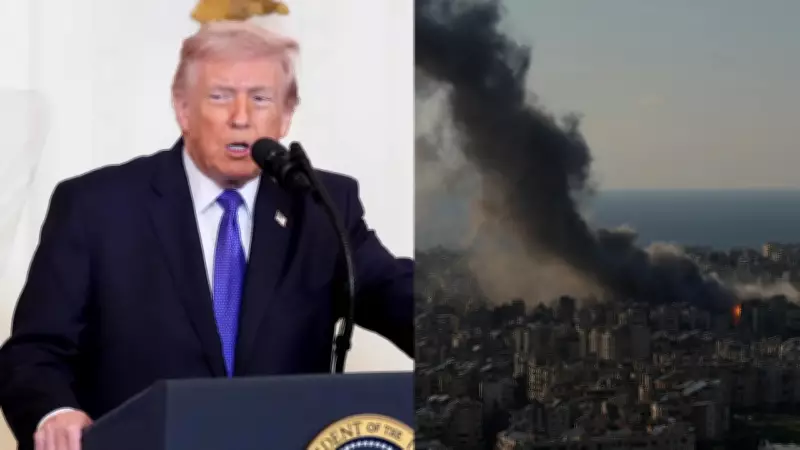
From Nuclear Talks to Operation Epic Fury: The Path to Trump's Iran Strike Order
In a dramatic escalation of tensions, the United States under President Donald Trump moved from diplomatic frustration to military action against Iran, culminating in the authorization of Operation Epic Fury. This decision followed months of strategic discussions, influenced heavily by Israel, and marked a significant shift in U.S. foreign policy in the Middle East.
The Israeli Influence and Oval Office Meeting
Israel, a key U.S. ally, played a pivotal role in steering Washington toward a confrontational stance with Iran. In February, Israeli Prime Minister Benjamin Netanyahu visited the Oval Office with a clear objective: to persuade President Trump to take robust action against the Islamic Republic, then led by Ayatollah Ali Khamenei. Netanyahu opposed any diplomatic efforts that might undermine plans for tougher measures, emphasizing the need for a strong military response.
During a nearly three-hour meeting, Netanyahu and Trump discussed the prospects of war, potential timelines for a strike, and the slim chances of securing a negotiated agreement with Iran. This meeting set the stage for the subsequent military campaign, highlighting the close coordination between the two nations.
Diplomatic Failures and Growing Skepticism
Despite ongoing diplomatic talks, Trump publicly expressed skepticism toward negotiations with Tehran. He dismissed past efforts as years of "talking and talking and talking," and when questioned about regime change in Iran, he suggested it "seems like that would be the best thing that could happen." This rhetoric signaled a hardening stance, as the administration simultaneously built up military assets in the region.
American and Iranian delegations met twice in Geneva in February, but these talks yielded no progress. Even as diplomacy continued, U.S. and Israeli officials were already planning for military action, indicating a lack of faith in peaceful resolutions.
The Authorization of Operation Epic Fury
On February 27, while aboard Air Force One en route to Corpus Christi, Texas, Trump authorized a sustained military campaign against Iran. The operation, dubbed Operation Epic Fury, began with a strike targeting Iran's supreme leader. Trump's order was clear: "Operation Epic Fury is approved. No aborts. Good luck."
This decision came after a briefing with the Gang of Eight, where Secretary of State Marco Rubio did not indicate plans for regime change, according to sources. However, the rapid shift to military action underscored the administration's impatience with diplomatic processes.
Intelligence Breakthrough and Strike Execution
The strike was meticulously planned, with initial considerations for Wednesday delayed to give Tehran a final chance to abandon its nuclear ambitions. It was postponed again to Friday, but a significant intelligence breakthrough altered the timetable. The CIA, monitoring Ayatollah Khamenei's movements, learned he would be at his residential compound in central Tehran on Saturday morning, along with senior officials.
This intelligence was shared with Israel, leading to a coordinated "decapitation" strike in broad daylight, enhancing the element of surprise. The attack occurred at 9:40 AM local time, targeting the compound while children were in school and government offices were open. Khamenei, who had vowed to accept martyrdom rather than hide, was in his office as missiles struck.
Military Assets and Coordinated Assault
Operation Epic Fury involved a massive deployment of U.S. military assets, including B-2 stealth bombers, F-15, F-16, F-22, and F-35 fighter jets, A-10 attack aircraft, and EA-18G electronic warfare planes. Support systems included Patriot interceptors, THAAD batteries, reconnaissance aircraft, and drones. Israel conducted its own campaign, Operation Lion's Roar, using advanced weapons like the "Black Sparrow" missile to hit deep inside Iranian territory.
The assault crippled Iran's senior military command and degraded air defense systems, showcasing the overwhelming force Trump described as a war of "overwhelming strength and devastating force."
Aftermath and Strategic Implications
Trump later explained his decision, stating, "Toward the end of the negotiation, I realized that these guys weren't going to get there. I said, 'Let’s just do it.'" This move has reshaped U.S.-Iran relations, with long-term consequences for regional stability and global diplomacy.
The events leading to Operation Epic Fury highlight the complex interplay of diplomacy, intelligence, and military strategy, driven by alliances and a decisive shift from talk to action under the Trump administration.