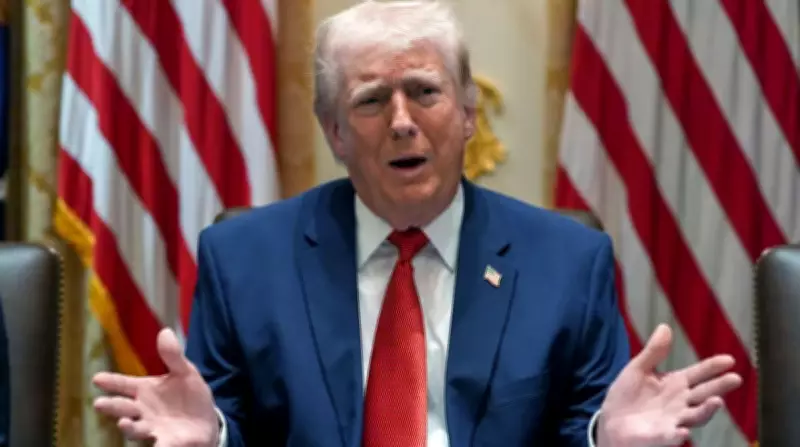
Trump Declares Intent to Open Strait of Hormuz Ahead of Ceasefire Talks
In a bold statement that has sent ripples across the international community, former United States President Donald Trump has announced plans to open the Strait of Hormuz, a critical maritime chokepoint, "fairly soon." This declaration comes just ahead of scheduled ceasefire talks in 2026, adding a layer of complexity to ongoing diplomatic efforts in the region.
Geopolitical Implications of the Statement
The Strait of Hormuz is a narrow waterway that connects the Persian Gulf to the Gulf of Oman and the Arabian Sea. It is one of the world's most strategically important passages, with approximately one-fifth of global oil consumption passing through it daily. Trump's remarks, made without specifying operational details, suggest a unilateral approach that could bypass Iran, which has historically exerted significant control over the strait.
This move is seen as a direct challenge to Iran's regional influence, potentially escalating tensions in an area already fraught with geopolitical rivalries. Analysts note that such actions could disrupt global energy markets and trigger broader conflicts, especially if Iran perceives this as an act of aggression.

Context of Ceasefire Negotiations
The timing of Trump's statement is particularly significant, as it precedes planned ceasefire talks aimed at de-escalating conflicts in the Middle East. These negotiations, set for 2026, involve multiple stakeholders, including regional powers and international mediators. Trump's vow to act "with or without Iran" could undermine diplomatic efforts, making it harder to achieve a peaceful resolution.
Experts warn that this could derail the fragile progress made in recent months, as it introduces a new variable into an already volatile situation. The international community is closely monitoring developments, with many calling for restraint and dialogue to prevail over unilateral actions.
Potential Consequences and Global Reactions
If the United States proceeds with opening the Strait of Hormuz without Iran's consent, several outcomes are possible:
- Increased Military Tensions: Iran might respond with military maneuvers or blockades, risking clashes with US forces or allies in the region.
- Economic Disruptions: Any instability in the strait could lead to spikes in oil prices, affecting global economies already grappling with inflation and supply chain issues.
- Diplomatic Fallout: Other nations, including European allies and China, may criticize the move as destabilizing, potentially straining international relations.
Trump's statement reflects his administration's previous hardline stance on Iran, which included sanctions and the withdrawal from the Iran nuclear deal. This latest development suggests a continuation of that policy, even as he is no longer in office, influencing current geopolitical dynamics.
Looking Ahead to the 2026 Ceasefire Talks
As the world prepares for the ceasefire talks in 2026, Trump's declaration adds urgency to the discussions. Stakeholders will need to address not only existing conflicts but also the potential for new flashpoints like the Strait of Hormuz. The success of these negotiations may hinge on whether parties can navigate such provocations and focus on collaborative solutions.
In summary, Trump's vow to open the Strait of Hormuz "fairly soon" marks a significant geopolitical development with far-reaching implications. It underscores the ongoing tensions between the US and Iran while posing challenges to upcoming ceasefire efforts. The international community remains on alert, hoping for diplomatic resolutions to prevent further escalation in this critical region.