Trump Expresses Doubt About Reza Pahlavi's Leadership Prospects in Iran
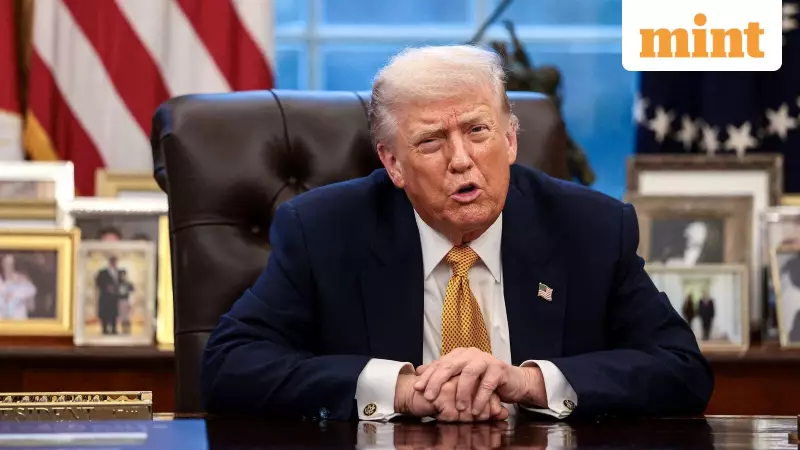
US President Donald Trump offered cautious remarks about Iranian opposition figure Reza Pahlavi during an exclusive Oval Office interview with Reuters on Wednesday. Trump described Pahlavi as "very nice" but questioned whether the exiled figure could secure enough support within Iran to assume power.
Trump's Hesitant Stance on Iranian Opposition Figure
"He seems very nice, but I don't know how he'd play within his own country," Trump told Reuters reporters. The president added, "And we really aren't up to that point yet."
Trump's comments represent a significant hesitation in his approach toward the Iranian opposition. While he has repeatedly threatened to support protesters challenging Iran's clerical government, he stopped short of fully endorsing Pahlavi, the son of Iran's late shah who was overthrown during the 1979 Islamic Revolution.

The president elaborated further on his reservations. "I don't know whether or not his country would accept his leadership, and certainly if they would, that would be fine with me," Trump stated during the interview.
Background on Reza Pahlavi and Iran's Opposition Landscape
Reza Pahlavi, aged 65 and based in the United States, has lived abroad since before his father's overthrow. He has emerged as a prominent voice during recent protests in Iran. However, Iran's opposition remains fragmented among competing groups and ideological factions.
Monarchists who support Pahlavi represent just one segment of this divided opposition. Observers note that these groups appear to have little organized presence inside Iran itself, complicating any potential leadership transition.
Trump Acknowledges Possibility of Government Change in Tehran
During the same interview, Trump acknowledged the possibility that Iran's clerical government could fall due to ongoing protests. "Whether or not it falls or not, it's going to be an interesting period of time," he remarked.
The president added a broader perspective on political instability. "Any regime can fail," he noted, suggesting that no government is immune to collapse under sufficient pressure.
Escalating Unrest and International Tensions
The current wave of protests in Iran began two weeks ago over worsening economic conditions. The demonstrations have escalated rapidly, with both Iranian officials and Western observers describing them as the most violent unrest since the 1979 Islamic Revolution.
An Iranian official reported over 2,000 deaths, while a human rights group placed the toll above 2,600. "Iran has never faced this volume of destruction," said Armed Forces Chief of Staff Abdolrahim Mousavi on Wednesday, blaming foreign adversaries for the turmoil.
As Iran's leadership struggles to contain the domestic crisis, Tehran is attempting to deter Trump's repeated threats to intervene in support of anti-government protesters. The United States is reportedly pulling some personnel back from bases in the Middle East following warnings from senior Iranian officials that Tehran would target American bases if Washington launched strikes.
The situation continues to develop as both domestic protests and international tensions create uncertainty about Iran's political future.