From Promised Job to a Suitcase in a Field: A Tribal Woman's Tragic End
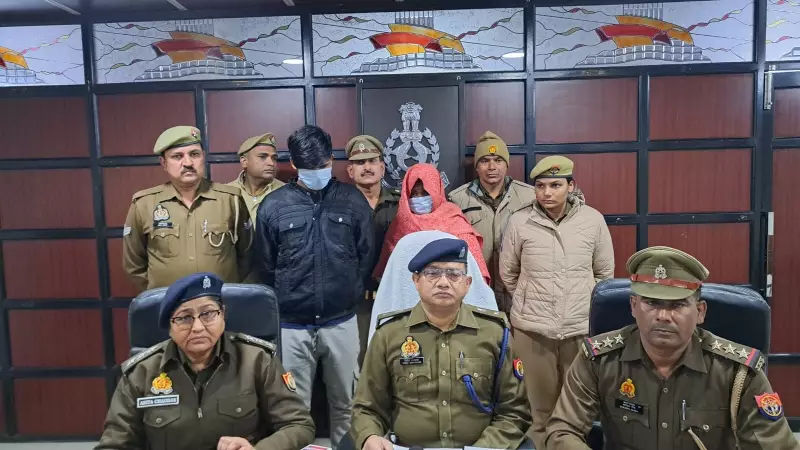
Two weeks ago, the discovery of a suitcase dumped in a sugarcane field in Hapur, Uttar Pradesh, set off a complex police investigation that peeled back the layers of a brutal human trafficking and murder case. The victim, a young tribal woman from Jharkhand, was allegedly sexually assaulted and killed by the very couple who had promised her a better life in Delhi. The Hapur police have arrested the accused, Kalista and her husband Ankit, who ran a domestic help placement agency named Shristi Enterprises.
The Deceptive Promise and a Family's Agony
In 2021, Kalista, an acquaintance from their village, approached the woman's family with an offer to take the then-minor victim and another girl to Delhi for employment. Belonging to one of Jharkhand's most vulnerable tribal communities and surviving as daily wage labourers, the family saw this as a crucial economic opportunity for their daughter. However, after she left, communication became sparse and the promised money never arrived. The family's desperate pleas for her return were met with empty assurances.
"She used to repeatedly tell us that my sister was safe and would be brought back," the victim's younger brother, a contract labourer in Goa, recounted. Their father died earlier this year after years of stressful pleading for his daughter's return. The mother held onto hope of hearing her voice again—a hope shattered by the gruesome news.

The Brutal Crime and a Cover-Up Attempt
According to Hapur Additional Superintendent of Police Vineet Bhatnagar, the couple's agency charged employers significant sums for domestic workers but never passed the money to the women employed. The investigation revealed that Ankit allegedly raped the victim after she resisted his advances. When she threatened to report him to the police, the couple murdered her.
In a twisted attempt to evade justice, they then coerced another woman working for them to confess to the murder on video. After the killing, they packed the victim's body into a suitcase, took an auto-rickshaw to a remote sugarcane field in Hapur, and abandoned it there. Police recovered four mobile phones, receipt books, and a stick suspected to be the murder weapon.
A Stalled Investigation and a Crucial Tip-Off
For two weeks after the body was found, the victim remained unidentified. Hapur police reached out to nearby stations, including in Delhi, where a missing person's complaint had been filed. "But the Delhi Police had paid no heed to it," stated ASP Bhatnagar. The breakthrough came from a tip about a Delhi resident frequently visiting a police station, who turned out to be the employer of the second woman. This "Good Samaritan" helped police connect with the traumatised witness, who then narrated the entire ordeal, leading to the identification of the victim and the arrest of the couple.
During interrogation, Ankit also confessed to sexually assaulting the second woman and filming the act.
A Village in Shock and Systemic Hurdles
Back in the Jharkhand village, neighbours revealed that Kalista would frequently return to "flaunt her lifestyle" and lure other girls with tales of Delhi's opportunities. The village head admitted past efforts to trace the missing woman had failed. The case has sparked calls for a deeper probe into local trafficking networks.
The tragedy is compounded by systemic issues. While local officials have visited the grieving family, talk of compensation faces a major hurdle: the absence of bank accounts or identity documents for the impoverished family. This raises practical questions about issuing a death certificate and disbursing any aid. Furthermore, the family lacks the funds to travel to Hapur to claim the victim's body, highlighting their profound vulnerability even in death.