From Bonded Labor to School: A Survivor's Journey in West Bengal
A remarkable story of resilience has emerged from West Bengal, where a twelve-year-old boy, identified as Sanket (name changed), has returned to school after enduring nearly two years of bonded labor. Sanket, originally from East Midnapore, was trafficked to Rajkot in Gujarat under false promises of education and care by his family. Instead, he was allegedly forced to work 12 to 14 hours daily at a gold manufacturing unit, suffering broken bones and critical health conditions.
Rescue and Recovery Operation
The case came to light when the Railway Protection Force (RPF) located Sanket in a dire state at Howrah station last year. His parents were notified and promptly rescued him. Based on Sanket's statements, police registered an FIR, which triggered a comprehensive rescue operation. This effort led to the recovery of 19 other children, highlighting the scale of trafficking in the region.
With assistance from the International Justice Mission (IJM), a civil society organization, and government support, Sanket has transitioned back into mainstream society. He now commutes to school on a bicycle purchased through government sponsorship, symbolizing a new chapter in his life.
Report on Bonded Labor and Trafficking in Bengal
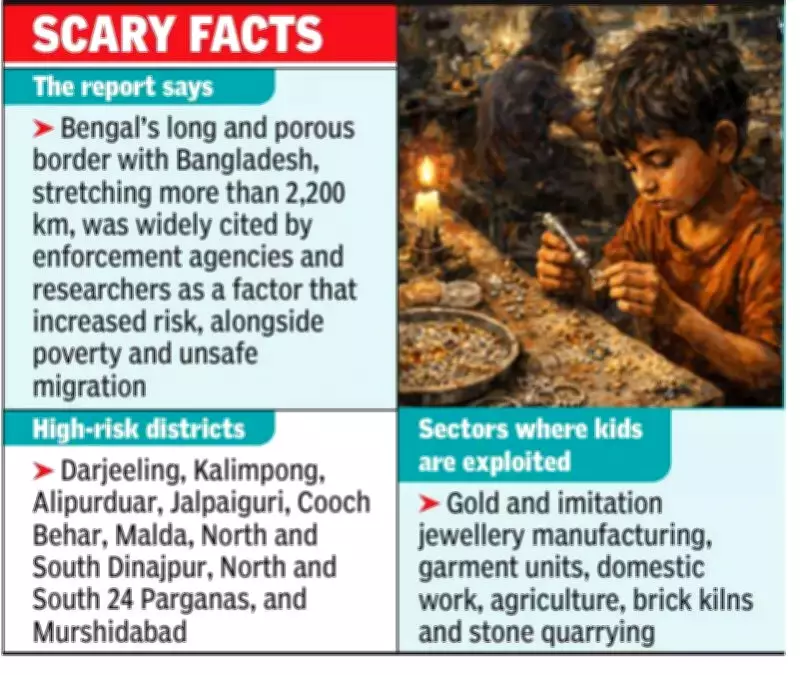
On the occasion of the golden jubilee of the Bonded Labour System (Abolition) Act, 1976, IJM, in collaboration with the government, released a report detailing the current state of bonded labor and trafficking in Bengal. The report cites the state's long and porous 2,200 km border with Bangladesh as a significant risk factor, alongside poverty and unsafe migration patterns.
According to recent data, India records approximately six trafficking cases annually between 2018 and 2022, with Bengal being among the most affected states. Survivors from Bengal are often exploited in sectors such as gold and imitation jewellery manufacturing, garment units, domestic work, agriculture, brick kilns, and stone quarrying.
Legal Awareness and Rehabilitation Efforts
In response, IJM and State Legal Service Authorities held legal awareness camps on Monday to educate communities about trafficking risks and legal recourse. While national efforts have rescued tens of thousands of children from labor and exploitation in recent years, challenges persist. Conviction rates remain low, and compensation for survivors is often delayed, as noted in multiple reports.
West Bengal has established Anti-Human Trafficking Units under the CID to coordinate rescues and investigations. Rehabilitation mechanisms include the West Bengal Victim Compensation Scheme and the "Muktir Alo" program. A key outreach event was recently held at Howrah station, attended by Railway Magistrate Niladri Kumar Nath and human rights activist Md Imtiaz Bharati, organized by Anubhuti, a coalition of NGOs, in collaboration with the Bengal GRP.
Positive Developments and Ongoing Challenges
On a brighter note, the report indicates that over 65% of trafficked children in Bengal are now actively traced and reintegrated into mainstream society. However, the fight against trafficking requires continued vigilance and support. Sanket's story serves as a poignant reminder of the human cost of bonded labor and the importance of robust rescue and rehabilitation systems.