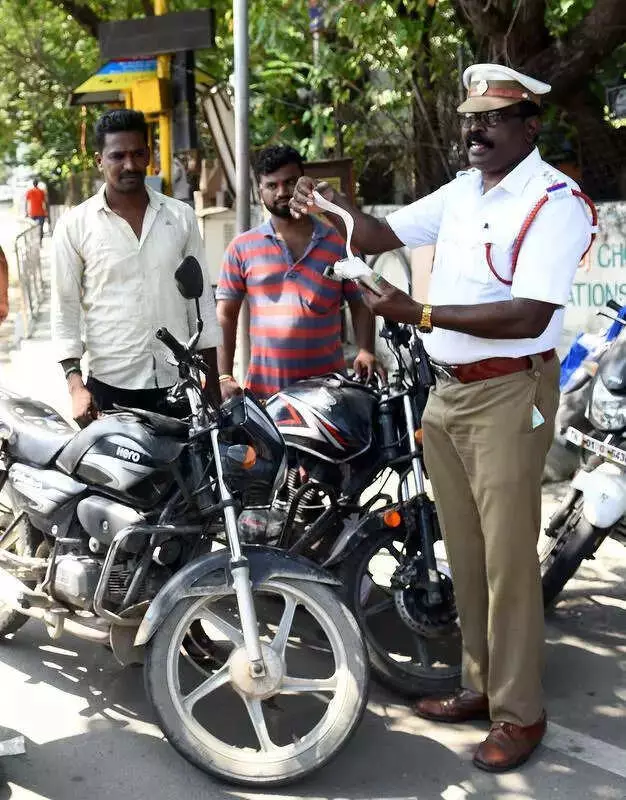
In a stark revelation of weak enforcement, the Tamil Nadu police are grappling with a massive pile of unpaid traffic fines, with motorists defaulting on a staggering ₹2,122 crore in penalties over the last three years. This colossal sum represents about 71% of the total fines levied during this period, highlighting a significant gap between issuing challans and actually recovering the money.
A Widening Gap in Fine Collection
The data presented before Parliament paints a worrying picture of declining recovery rates. In the year 2024 alone, the state issued approximately 1.11 crore e-challans for violations including drunk driving, speeding, riding without helmets, and using mobile phones while driving. The total penalty amount for these offences stood at around ₹1,325 crore. However, authorities managed to recover only ₹314 crore, translating to a dismal recovery rate of just 24%.
This trend shows a consistent worsening over the years. Back in 2022, the police recovered about ₹161 crore, which was 43% of the ₹378 crore levied that year. The recovery rate slipped to approximately 30% in 2023 and fell further to the current 24% in 2024. Cumulatively for the three-year period from 2022 to 2024, the police realised roughly ₹853 crore out of the nearly ₹2,975 crore that was due from violators.

Lack of Follow-Up Mechanisms to Blame
Officials attribute this sharp drop in collections to a lack of robust follow-up mechanisms. A traffic police officer explained that earlier initiatives, such as sending volunteers to the homes of repeat offenders and vehicle owners with large outstanding dues in cities like Chennai, have slowed down considerably. Chennai accounts for a major share of the challans issued in the state.
While a call centre continues to operate, reminding offenders of their pending fines, its role is largely limited to seeking voluntary compliance. "A call centre continues to remind offenders of pending fines, but its role is limited to seeking voluntary payment," the officer stated, underscoring the system's passive nature.
Unused Powers and Low Licence Cancellations
Despite the central government granting states the authority in April 2025 to suspend driving licences for fines unpaid beyond three months, Tamil Nadu has not yet amended its rules to enforce this provision. This powerful deterrent remains unused.
Furthermore, the police have the power to get a driving licence cancelled permanently for repeat offenders, but this too has not been pursued aggressively. In a telling statistic, only 800 licences were cancelled in Chennai over five years for repeat traffic offences, indicating a major enforcement loophole.
As road accidents continue to rise, this huge backlog of unpaid fines not only represents a massive loss of potential revenue for the state but also raises serious questions about the effectiveness of traffic law enforcement and its role as a deterrent against dangerous driving behaviour.