Threatening Poster Targeting Garos Sparks Tension in Meghalaya's West Garo Hills
A disturbing poster threatening the Garo community to vacate the area has created significant unease in Meghalaya's West Garo Hills district, with police authorities suspecting it to be a deliberate attempt to disrupt peace and stability in the region.
Discovery of the Provocative Poster
The controversial poster was discovered pasted on an electric pole near a law college in Tura, which serves as the district headquarters of West Garo Hills. The rough poster, printed on a plain white sheet of paper, claimed to be issued by a 'Plain Belt Area Committee' of the 'ISIS-K' and contained explicit warnings directed at Garos living in West Garo Hills to leave the land before 2027.
Immediate Response from Authorities
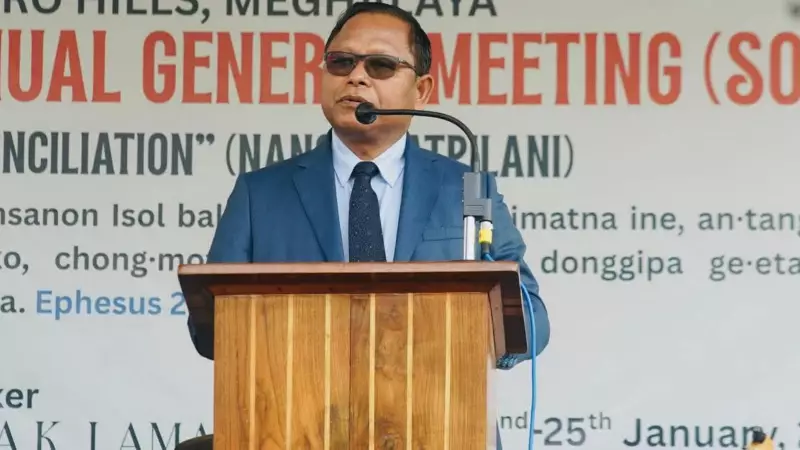
Meghalaya Cabinet Minister Marcuise N Marak, who represents the Williamnagar constituency in East Garo Hills as an MLA, raised serious concerns about the poster on Wednesday. In a strong statement, he condemned what he described as an act of intimidation against the Garo community and their peaceful coexistence in the region.

"As a representative of Meghalaya, but first, as a citizen, and as a member of the Garo community, I strongly condemn this act of intimidation and threat against our land, our people, and our peaceful coexistence," Minister Marak stated emphatically. "Such attempts to spread fear and division have no place in our society. Meghalaya has always stood for harmony, mutual respect, and unity among all communities, irrespective of religion or caste, and we remain firmly committed to these values."
Police Investigation and Assessment
The West Garo Hills police have registered a formal case regarding the incident and initiated a thorough investigation. Superintendent of Police Abraham Sangma revealed that preliminary assessments suggest the poster might represent a calculated effort by individuals or groups with vested interests to create anxiety and disturb the law and order situation in the district.
"Preliminary assessment indicates that this may be a deliberate attempt by a person or group with vested interests to create anxiety and disturb the law and order situation in the district," SP Abraham Sangma confirmed. "The poster has been removed and sent for forensic analysis. All-out efforts are being made to identify and trace the persons responsible."
Administrative Actions and Community Response
Minister Marak confirmed that the district administration has been formally informed about the incident, and concerted efforts are underway to identify and take appropriate action against those responsible for what he termed a "provocative and unlawful act." He urged community members to remain calm, united, and vigilant while placing their faith in government institutions to protect people and land.
"I urge everyone to remain calm, united, and vigilant, and to place full faith in our government, administration and the law to protect our people and our land," the Minister appealed to the public.
Broader Context and Regional Sensitivities
This incident occurs against a backdrop of heightened sensitivity in West Garo Hills, which borders Bangladesh and features a mixed population composition. The discovery of the threatening poster comes just two weeks after inter-community tensions flared in the same district following the death of a youth who was a member of the Garo pressure group ACHIK.
That previous incident, which involved an altercation at an illegal stone quarry, had prompted immediate peace meetings and calls for communal harmony, resulting in eight arrests. The current poster threat has reignited concerns about community relations in this strategically important border region of Northeast India.
The situation remains under close monitoring by authorities as investigations continue to determine the origins and motivations behind the threatening communication that has unsettled the Garo community and raised broader questions about social harmony in Meghalaya.