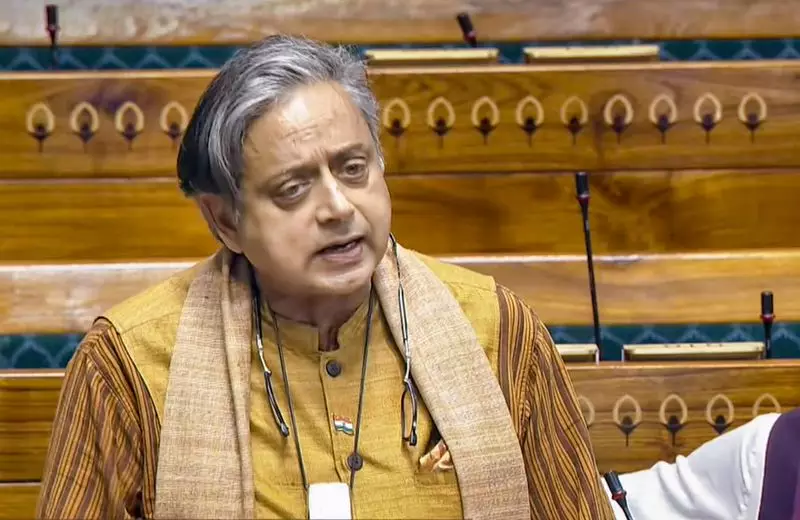
Congress leader and Member of Parliament Shashi Tharoor has issued a powerful call for India to criminalize marital rape, labeling the current legal exception a direct assault on women's dignity and constitutional rights. His remarks came during a detailed discussion on the need for comprehensive legal reforms to ensure gender justice.
A Colonial Relic in Modern India
Tharoor pinpointed the root of the problem in Exception 2 to Section 375 of the Indian Penal Code (IPC). This provision, a holdover from British colonial law established in 1860, explicitly states that sexual intercourse by a man with his own wife is not considered rape if the wife is not a minor. Tharoor argued that this archaic law treats a married woman as the property of her husband, a concept utterly incompatible with contemporary values of equality and individual autonomy.
He emphasized that the exception creates a dangerous and discriminatory legal vacuum. "It is a profound anomaly that a woman's right to bodily integrity and her ability to say 'no' are legally invalidated by the institution of marriage," Tharoor stated. This, he contends, violates the constitutional guarantees of equality, life, and personal liberty for married women.
The Core Argument: Dignity and Constitutional Duty
The central thrust of Tharoor's argument is that protecting women's dignity is a non-negotiable state obligation. He framed the decriminalization of marital rape not just as a legal tweak but as a fundamental constitutional and moral imperative. The law, in its current form, fails to recognize that rape within marriage is as traumatic and violent as rape by a stranger, causing severe physical and psychological harm.
Tharoor challenged the common but flawed defenses of the exception, such as concerns over false cases or the sanctity of marriage. He asserted that the legal system is equipped to handle false complaints in all crimes, and that no institution's 'sanctity' can be built on the foundation of state-sanctioned sexual violence. True marital sanctity, he argued, is based on mutual respect and consent.
Aligning Law with Progressive Judgments
The MP highlighted that the push to criminalize marital rape is in sync with the progressive direction of India's Supreme Court. He referenced landmark judgments that have progressively dismantled discriminatory practices, such as the decriminalization of homosexuality and the outlawing of the instant triple talaq. These rulings underscore a judicial trend towards interpreting the Constitution as a living document that guarantees fundamental rights to all individuals, irrespective of personal status.
Tharoor urged the government and lawmakers to follow this judicial lead and reform the penal code. He called for the outright deletion of Exception 2 to Section 375, thereby removing the marital rape exemption and making non-consensual sexual intercourse within marriage a prosecutable offense. This change would affirm that consent is paramount in all sexual relationships, marital or otherwise.
The consequences of maintaining the status quo are severe, Tharoor warned. It perpetuates a culture of impunity for sexual violence in the private sphere, discourages reporting, and sends a message that a woman's rights are diminished upon marriage. Conversely, criminalization would be a landmark step for gender justice, empowering married women, aligning Indian law with international human rights standards, and finally affirming that a wife is not chattel but an equal partner with full autonomy over her own body.