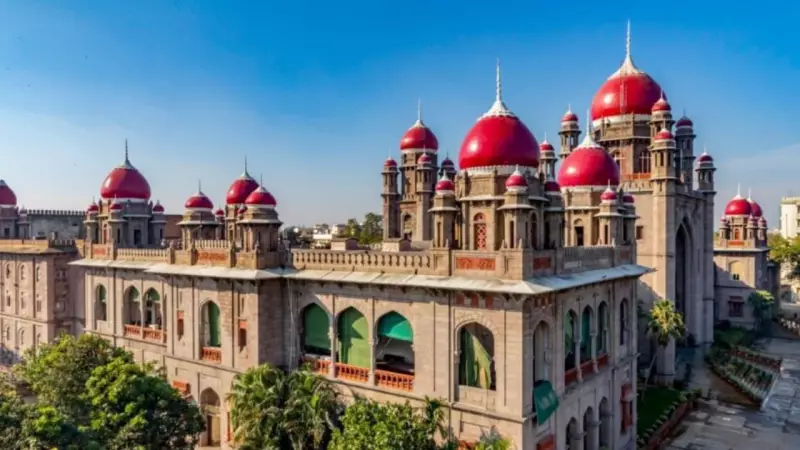
The Telangana High Court is set to pronounce its order on Friday regarding a significant petition that contests the appointment of B Shivadhar Reddy as the state's Director General of Police (DGP). The court's decision is keenly awaited as it touches upon crucial Supreme Court mandates concerning police reforms.
Key Arguments Presented in Court
Justice Pulla Karthik presided over the hearing on Thursday, which saw extensive legal arguments from multiple parties. Advocate General A Sudarshan Reddy, representing the state government, defended the appointment process. He asserted that Telangana had complied with procedural requirements by submitting a list of eligible candidates to the Union Public Service Commission (UPSC).
However, he contended that the UPSC returned the list without providing a valid reason for its rejection. On behalf of the Union Home Ministry (MHA), Additional Solicitor General B Narasimha Sharma clarified that the central ministry had no role in this specific appointment matter.

Petitioner's Claim and UPSC's Counter
The petitioner, T Dhangopal Rao, challenged the appointment, alleging it violated the Supreme Court's guidelines on police reforms. Rao sought a stay on Shivadhar Reddy's appointment and urged the court to direct the state to appoint a permanent DGP in strict compliance with the apex court's directives.
Representing the UPSC, counsel Ajay Kumar Kulkarni presented a critical point. He argued that the state of Telangana sent its recommendations after an "abnormal delay" of seven years, with the last panel of names being submitted to the commission back in 2017. This delay was a central point of contention during the proceedings.
Awaiting the Judicial Verdict
After hearing all sides, the High Court adjourned the hearing to deliberate and prepare its orders. The ruling scheduled for Friday will determine the immediate future of the state's top police post. The outcome is expected to set a precedent on adherence to the Supreme Court's police reform guidelines, particularly concerning the transparency and timeliness of the appointment process for the head of the police force.
The case highlights the ongoing tension between state governments and central commissions like the UPSC in key bureaucratic appointments. It also underscores the judicial system's role in enforcing procedural integrity and constitutional mandates in administrative decisions.