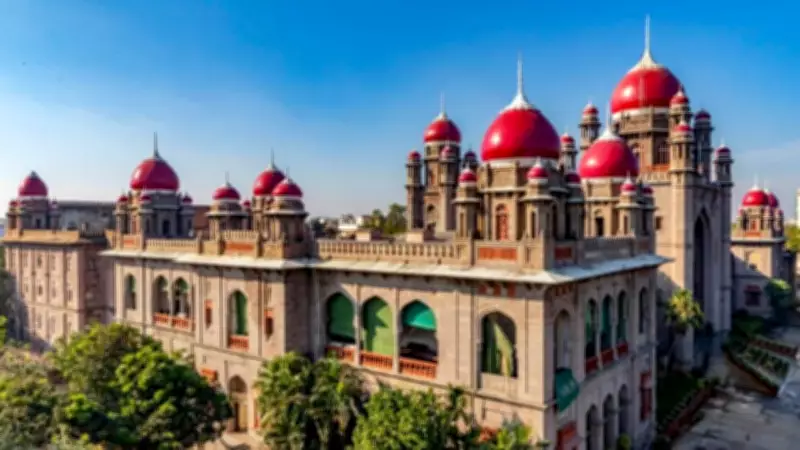
Telangana High Court Declines Interim Relief in Temple Land Dispute
The Telangana High Court on Tuesday refused to grant any interim relief to a group of residents from Saidabad, Hyderabad, who had filed petitions challenging an order by the Endowment Tribunal that declared them as encroachers on temple land.
Court Proceedings and Directions
A bench presided over by Justice Namavarapu Rajeshwar Rao heard the matters and issued specific directions. The court declined to pass interim orders at this stage, instead instructing the endowments department to file their counters within a four-week timeframe. Following this submission period, the matter has been adjourned for further hearing, allowing both sides to prepare their arguments more thoroughly.
Background of the Land Dispute
The petitioners in this case comprise eleven families who have allegedly encroached upon 1.20 acres of land belonging to the Sri Bansuri Krishna Mandir at Karmanghat. This temple property is situated in a prime location and spans a total area of 2.35 acres. The families in question have been residing on this contested land for approximately three decades, during which time they constructed multi-storeyed buildings after obtaining what they claim were requisite permissions from the concerned authorities.
Legal Arguments and Tribunal Decision
Despite the petitioners' claims of having purchased the lands through registered sale deeds and maintaining long-term possession, the Endowment Tribunal conducted a thorough examination of the evidence presented. In October 2025, the tribunal delivered its verdict, holding that the petitioners had indeed encroached upon the temple land and subsequently ordered their eviction from the property.
Challenging this tribunal order, the petitioners approached the Telangana High Court seeking judicial intervention. Their primary request was for the court to set aside the tribunal's eviction orders and instead pass rulings that would restore their ownership rights over the disputed land.
Government's Position and Evidence
Representing the endowments department, counsel Bhukya Mangilal Naik, along with Government Pleader Herur Rajesh Kumar and Standing Counsel Ch. Satish Kumar, presented comprehensive documentary evidence before the bench. Their contention was clear and unequivocal: the land in question rightfully belongs to the temple, and the tribunal had correctly ruled in favor of protecting this religious property from encroachment.
The government's legal team emphasized that the tribunal's decision was justified based on the evidence examined, which they argued clearly established the temple's ownership claims over the disputed 1.20 acres within the larger 2.35-acre temple complex.
Implications and Next Steps
This case highlights the complex intersection of property rights, religious endowments, and urban development in Hyderabad's growing landscape. The court's refusal to grant interim relief at this juncture suggests a careful judicial approach to balancing individual claims against institutional property rights.
With the endowments department now required to file detailed counters within the specified four-week period, both parties will have additional opportunity to substantiate their claims before the next hearing. The outcome of this case could set important precedents for similar temple land disputes across Telangana, particularly in urban areas where development pressures often conflict with historical property arrangements.