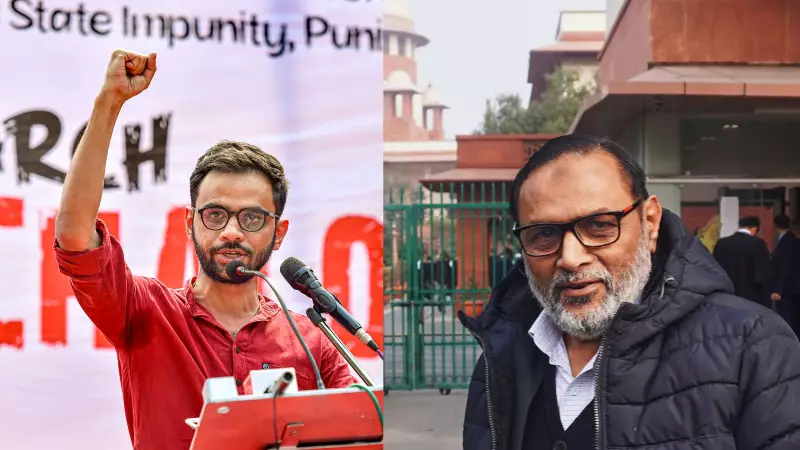
In a significant development, the Supreme Court of India on Monday, January 5, 2026, rejected the bail petitions of activists Umar Khalid and Sharjeel Imam in connection with the 2020 Northeast Delhi riots cases. The apex court stated that the duo stood on a "higher footing in the hierarchy of participation" in the alleged larger conspiracy behind the violence.
Verdict and Immediate Reaction
Following the pronouncement of the verdict, Umar Khalid's father, S Qasim Ilyas, expressed deep disappointment, terming the top court's decision as "very unfortunate." Speaking to mediapersons outside the court, Ilyas said, "I have no comment to offer. It is very unfortunate. I have nothing to say about it. The judgment is there."
In a contrasting move, the same bench, comprising Justices Aravind Kumar and Prasanna B Varale, granted conditional bail to five other accused in the case: Gulfisha Fatima, Meeran Haider, Shifa-ur-Rehman, Mohammad Salim Khan, and Shadab Ahmad. Reacting to this, Umar Khalid, through his partner Banojyotsna Lahiri, conveyed that he was happy and relieved for them, even as he resigned to the fact that jail had become his life.
Court's Reasoning and Legal Context
The Supreme Court bench clarified that its bail exercise was not an assessment of the overall conspiracy case or a ranking of culpability. "This exercise does not dismantle the prosecution case of conspiracy, nor does it rank culpability," the justices noted. They emphasized that the objective was to ensure that pre-trial incarceration is not indiscriminate and that statutory restraints are applied reasonably and proportionately, based on individual attribution.
This Supreme Court order comes after the Delhi High Court, on September 2 last year, had rejected the bail pleas of nine accused. The High Court had then ruled that the riots were not a spontaneous protest but a "premeditated and well-orchestrated conspiracy," and the seriousness of charges under the stringent Unlawful Activities (Prevention) Act (UAPA) warranted denial of bail. The Supreme Court was hearing a batch of Special Leave Petitions (SLPs) challenging that High Court order.
Wider Implications and Conclusion
The denial of bail to Khalid and Imam underscores the legal complexities and high stakes involved in cases tried under anti-terror laws. The court's differentiation between accused persons based on their alleged role in the hierarchy highlights the nuanced application of bail jurisprudence in such sensitive matters. While five individuals have secured conditional release, the continued detention of Khalid and Imam points to the long legal battle ahead as the main conspiracy case proceeds. The verdict is set to reignite debates on the balance between individual liberty and national security in the Indian judicial landscape.