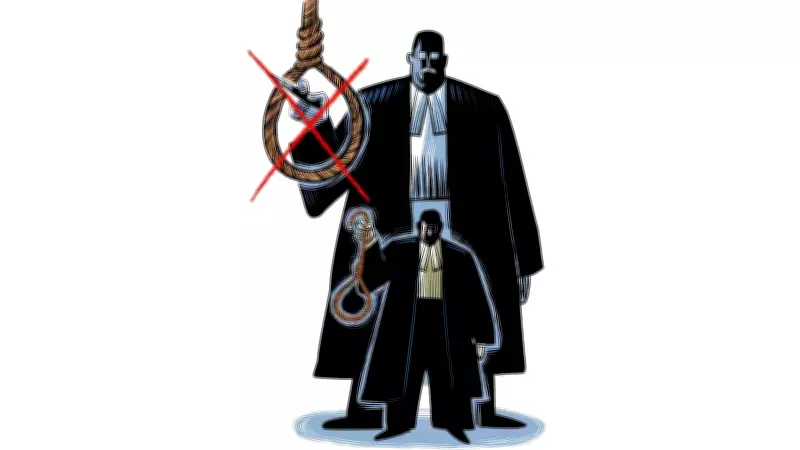
Supreme Court Overturns Death Sentence After 12 Years, Exposes Flawed Justice System
In a landmark ruling that underscores deep systemic flaws within India's criminal justice framework, the Supreme Court has acquitted Ramesh, a poor and uneducated laborer from Uttar Pradesh, after he spent twelve agonizing years on death row. The court's decision came after it found the purported confession used to convict him of murdering his wife and four young daughters to be "suspicious" and entirely uncorroborated by any substantial evidence.
A Decade-Long Ordeal of Injustice
Ramesh's harrowing journey through the legal system began when he was accused of the horrific crime. Following an alleged confession to the police, a lower court swiftly sentenced him to death, seemingly closing the case. However, the real punishment for Ramesh was not the sentence itself but the profoundly flawed process that followed. Over the next twelve years, he was shuttled from one hearing to another without ever stepping foot inside a courtroom to witness his own trial proceedings.
This complete lack of physical presence in court meant Ramesh was utterly disconnected from the legal battle determining his fate. He remained confined to a prison cell, isolated and unaware of the critical developments unfolding in his case. The situation was exacerbated by his socioeconomic status as a destitute laborer with no formal education, leaving him vulnerable and unable to navigate the complex judicial machinery on his own.
Systemic Failures in Legal Representation and Due Process
The Supreme Court's acquittal highlights several glaring failures in the administration of justice, particularly for marginalized individuals like Ramesh. Key issues identified include:
- Inadequate Legal Aid: Ramesh neither knew the lawyer assigned to defend him nor had any understanding of the defense strategy being employed on his behalf. This lack of communication and rapport between client and counsel is a severe breach of the right to effective legal representation.
- Absence of Due Process: The court noted that the confession was dubious and unsupported by other evidence, raising questions about police procedures and the lower court's reliance on such a weak foundation for a capital punishment verdict.
- Procedural Neglect: Being moved through hearings without courtroom access deprived Ramesh of his fundamental right to participate in his own trial, violating principles of fair trial and transparency.
These systemic shortcomings not only prolonged Ramesh's incarceration but also inflicted immense psychological and emotional trauma, turning the legal process itself into a punitive experience far beyond any formal sentence.
Broader Implications for Prisoner Rights and Legal Reform
This case serves as a stark reminder of the urgent need for comprehensive reforms in India's criminal justice system, especially concerning prisoner rights and access to justice. The Supreme Court's ruling emphasizes that:
- Confessions must be rigorously scrutinized and corroborated with independent evidence before being accepted in court, particularly in capital cases.
- Legal aid mechanisms must be strengthened to ensure that poor and uneducated defendants receive competent, communicative, and dedicated representation.
- Procedural safeguards, such as ensuring defendants' presence in court and their understanding of proceedings, are non-negotiable components of a fair trial.
By overturning Ramesh's death sentence, the Supreme Court has not only granted him a second chance at life but also issued a clarion call for systemic introspection and reform. It underscores that justice delayed is justice denied, and in cases involving the most vulnerable, the stakes are too high to tolerate such profound failures. This decision may pave the way for future legal challenges and policy changes aimed at protecting the rights of prisoners and ensuring that no one else endures a similar ordeal of injustice.