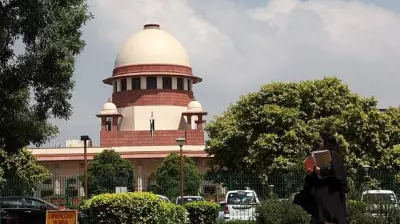
Supreme Court's IPS Deputation Phase-Out Order Faces Contradiction from New CAPF Bill
For decades, approximately 13,000 officers serving in India's Central Armed Police Forces have witnessed a persistent structural barrier to career advancement. These officers, who dedicate their careers to organizations like the CRPF, BSF, CISF, ITBP, and SSB, have systematically been denied access to the highest leadership positions within their own forces. These CAPFs, with a combined strength of nearly one million personnel, are tasked with critical national security duties—guarding the Line of Control in Jammu and Kashmir, securing the China border in Ladakh, protecting India's airports and nuclear installations, and operating in Naxal-affected regions.
Historical Deputation System and Judicial Intervention
The top ranks, from Deputy Inspector General to Director General, have historically been reserved for Indian Police Service officers on deputation. This arrangement originated in the 1950s as a temporary measure during the expansion of the CRPF, which at the time lacked its own senior cadre. Despite the CAPF now having a fully developed cadre, this temporary system has persisted indefinitely.
The issue eventually reached the Supreme Court, which delivered a landmark ruling in favor of CAPF officers. The court granted them parity of status with the IPS, IAS, and IRS, and directed the government to progressively reduce IPS deputation posts in the CAPFs up to the level of Inspector General within a two-year timeframe. The government challenged this verdict, but the Supreme Court firmly rejected the review petition in October 2025, leaving the original directive intact.
Government's Contradictory Actions and Legislative Move
Implementation of the court's order stalled, leading to the accumulation of contempt petitions. During subsequent hearings, the government requested an additional year to comply with the directive. However, in a parallel development, the Union Cabinet cleared the Central Armed Police Forces General Administration Bill. This legislation is specifically designed to retain IPS deputation at the Inspector General and Deputy Inspector General levels within the CAPFs—precisely the arrangement the Supreme Court had ordered to be dismantled.
This creates a stark contradiction: one hand of the government is in court asking for more time to implement the phase-out, while the other is in the Cabinet making that extra time permanently unnecessary through legislative action.
Coordination Arguments and Inconvenient Comparisons
The government's primary argument for retaining IPS deputation centers on coordination, claiming that IPS officers bring cross-force relationships that pure CAPF cadre leadership would struggle to replicate. However, this justification encounters two inconvenient comparisons that challenge its validity.
The Railway Protection Force functions efficiently with its own cadre occupying the top leadership positions, demonstrating that specialized forces can operate effectively without external deputation. Similarly, the Indian Coast Guard no longer depends on Navy deputation for its senior roles. Both organizations coordinate effectively with other agencies, maintain operational functionality, and have not experienced any collapse in their command structures.
For the 13,000 CAPF officers who have spent their careers earning every promotion stripe in conditions most Indians will never experience, the new CAPF Bill represents more than just a policy disagreement—it potentially undermines their career aspirations and the Supreme Court's directive for equitable treatment within India's security architecture.