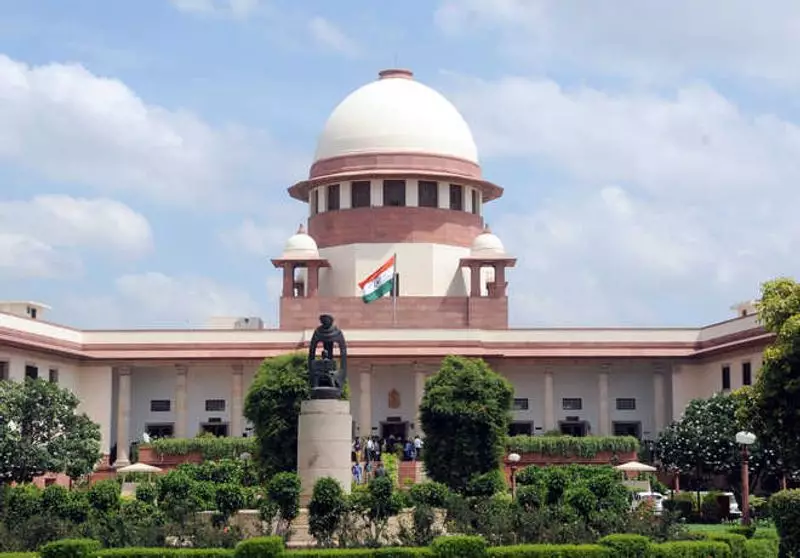
The Supreme Court of India has expressed strong disapproval of a growing trend in temples across the country: offering special, high-priced rituals or 'pujas' exclusively to wealthy devotees. The apex court questioned the ethical and legal standing of such practices, suggesting they create an unacceptable hierarchy of access to the divine based on financial capacity.
Court's Stern Observation During Hearing
A bench comprising Justices Justice P S Narasimha and Justice Aravind Kumar raised the issue while hearing a petition related to the Sri Venkateswara Swamy Temple in Andhra Pradesh's Tirumala. The counsel for the temple trust, the Tirumala Tirupati Devasthanams (TTD), mentioned the availability of special 'sevas' or rituals for which devotees can pay a higher price.
This admission prompted a sharp reaction from the bench. Justice Narasimha pointedly asked whether a temple, as a public religious institution, can legally create a system where "a rich man can pay Rs 500 and a poor man can pay Rs 100" for the same religious offering or darshan. The court emphasized that such a model appears to commercialize faith and introduce discrimination at the altar.
The Core Issue: Equality Before the Divine
The court's concern centers on the fundamental principle of equality in places of worship. The bench argued that temples are established for the benefit of all devotees, irrespective of their social or economic status. Creating a paid, tiered system for religious services, the judges implied, violates the spirit of religious institutions as egalitarian spaces.
"You are making a distinction between the rich and the poor before God," the bench remarked, capturing the essence of its objection. The practice of VIP darshans or special pujas, often criticized informally, was now being scrutinized at the highest judicial level for potentially fostering a pay-to-pray environment.
Wider Implications and Temple's Response
While the hearing specifically involved the famed Tirumala temple, the Supreme Court's observations have nationwide ramifications. Many major temples and shrines across India offer similar premium services or faster access to deities for larger donations, a significant revenue stream for temple trusts.
In response to the court's questioning, the TTD counsel defended the practice by stating that the funds collected from such special sevas are used for charitable purposes and the maintenance of the temple complex. However, the bench remained unconvinced by this justification, maintaining that the method of collection itself was problematic if it created inequality among devotees.
The court has now directed the temple authorities to file a detailed affidavit explaining the rationale and legal basis for conducting such differential pujas. This move signals a potential judicial intervention that could reshape how temples manage donor privileges and access to rituals.
The Supreme Court's stance has ignited a fresh debate on the intersection of faith, commerce, and social justice in Indian religious practice. It challenges long-standing administrative norms in temple management and puts the spotlight on whether spiritual solace should have a price tag that only some can afford.