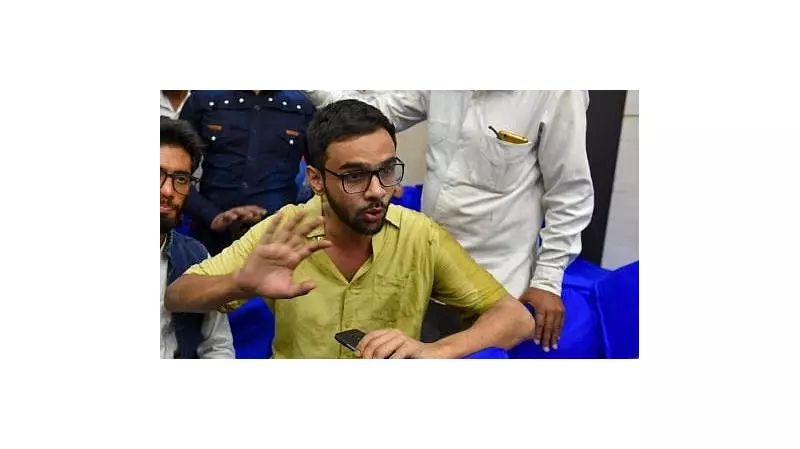
In a significant legal development, the Supreme Court of India has rejected the bail plea of former Jawaharlal Nehru University student activist Umar Khalid. Khalid is a key accused in a larger conspiracy case related to the communal violence that shook northeast Delhi in February 2020.
A Life Behind Bars: Khalid's Reaction to the Verdict
Following the court's decision, Umar Khalid conveyed a poignant message to his partner, journalist and activist Jignesh Mewani. "Jail is my life now," he stated, encapsulating the grim reality of his prolonged incarceration. Khalid has been in jail since September 2020, arrested under the stringent Unlawful Activities (Prevention) Act (UAPA).
The bench, comprising Justices Bela M. Trivedi and Pankaj Mithal, delivered the verdict on Tuesday, October 17, 2023. They upheld the earlier decisions of the trial court and the Delhi High Court, which had also denied him bail. The Supreme Court concluded that the allegations against Khalid were "prima facie true" and that the provisions of the UAPA were rightly invoked in this case.
The Legal Battle and the Charges
The case against Umar Khalid is part of a first information report (FIR) number 59, which alleges a premeditated conspiracy behind the Delhi riots. The violence, which erupted during protests against the Citizenship Amendment Act (CAA), resulted in the deaths of over 50 people and left hundreds injured.
The prosecution, led by the Delhi Police, has accused Khalid of being a mastermind. They claim he gave provocative speeches and was part of a larger plot to incite violence. His legal team, however, has consistently argued that the evidence is circumstantial and that the charges are politically motivated. They emphasized that Khalid had always advocated for peaceful protest.
The Supreme Court's ruling focused on the high threshold for granting bail under the UAPA. The anti-terror law makes securing bail exceptionally difficult, as the court must be satisfied that the accusations are not prima facie true. Justices Trivedi and Mithal found that this threshold was not met in Khalid's favor.
Broader Implications and the Path Ahead
This verdict is seen as a major setback for Khalid and several other activists jailed in connection with the same case. It underscores the challenges of seeking relief under the UAPA, where the legal process is often protracted. With the bail plea rejected, Khalid's only immediate legal recourse is to await the commencement and conclusion of the trial, which could take several more years.
The decision has reignited debates around the use of the UAPA in cases involving dissent and protest. Civil liberty groups have expressed concern, viewing the judgment as a blow to the right to a speedy trial and the presumption of innocence until proven guilty. The legal and political ramifications of this case continue to be closely watched across the nation.
For now, Umar Khalid remains in Delhi's Tihar Jail, with his statement, "Jail is my life now," reflecting the indefinite nature of his detention as the wheels of justice turn slowly in one of the country's most high-profile and contentious legal battles.