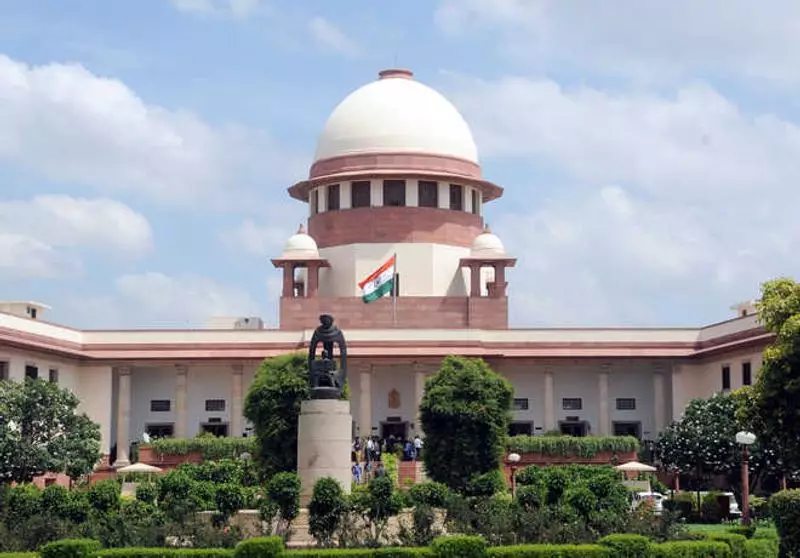
The Supreme Court of India has issued a stern warning against bureaucratic inertia, stating that such delays are a major deterrent to entrepreneurship and economic growth in the country. The court's remarks came while hearing a case that exposed a shocking 17-year wait for a decision on a mining lease application.
A 17-Year Wait for a Decision
The bench, comprising Justices B.R. Gavai and Sandeep Mehta, was dealing with a petition filed by businessman Prafull Chandra. The case revolved around an application for a mining lease for soapstone, submitted to the Rajasthan government as far back as January 2007. For over a decade and a half, the application languished without a final decision, prompting the petitioner to approach the highest court for relief.
Expressing strong disapproval, the court highlighted how such inaction directly impacts business confidence. "This is how entrepreneurship is discouraged," Justice Gavai remarked from the bench. The court pointed out that when an entrepreneur invests significant capital based on an application, an indefinite bureaucratic delay can lead to severe financial losses and erode trust in the system.
Court Directs Swift Action and Warns of Costs
Taking a firm stand, the Supreme Court directed the state of Rajasthan to finally process the long-pending application. The bench ordered the concerned authorities to pass a formal order on the mining lease application within a strict deadline of four weeks.
Furthermore, the court made it clear that failure to comply with this timeline would have consequences. It stated that if the order is not passed within the stipulated four weeks, the responsible secretary of the department would be required to appear before the court personally. The bench also indicated that it would consider imposing heavy costs on the state government for the prolonged and unjustified delay, emphasizing accountability.
Broader Implications for Governance and Ease of Doing Business
This ruling transcends the individual case and serves as a powerful commentary on administrative efficiency. The Supreme Court's observations underscore a critical barrier to India's ease of doing business rankings and entrepreneurial spirit. Bureaucratic lethargy, often referred to as "red-tapism," remains a significant hurdle for citizens and businesses seeking timely permissions and clearances from government departments.
The court's intervention signals the judiciary's growing impatience with such systemic delays that stifle economic activity. By setting a short deadline and threatening personal accountability for officials, the judgment aims to inject urgency into administrative processes. It reinforces the principle that the government and its agencies must act within a reasonable timeframe, especially on matters that affect livelihoods and investments.
The case, titled Prafull Chandra vs State of Rajasthan & Ors, is now scheduled for its next hearing in July 2024, by which time the state is expected to have complied with the court's directive. This proceeding will be closely watched as a test of administrative responsiveness to judicial mandates aimed at curbing bureaucratic inertia.