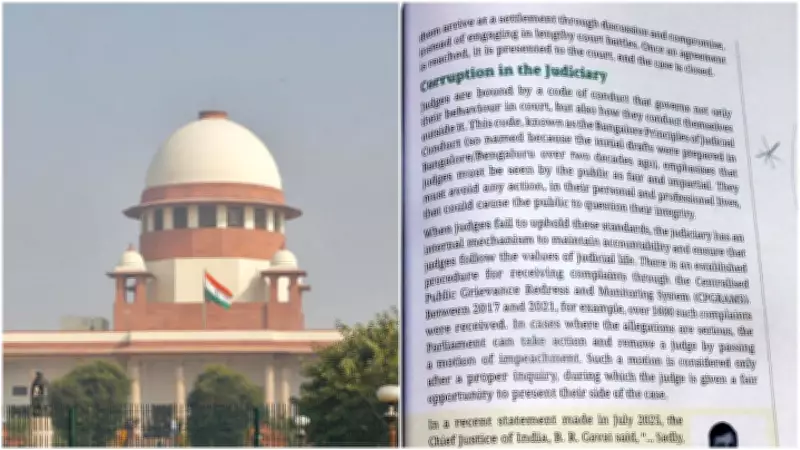
Supreme Court Halts Sale of NCERT Textbook Amid Judicial Corruption Row
The Supreme Court of India has issued a decisive order banning the sale of a controversial NCERT Class 8 textbook that includes a chapter addressing judicial corruption. This move comes in response to escalating concerns over the content's potential to undermine public trust in the judiciary.
Chief Justice Suyra Kant's Strong Remarks on Conspiracy
During the proceedings, Chief Justice of India Suyra Kant delivered a powerful statement, asserting that there appears to be a deep-rooted and well-planned conspiracy aimed at defaming the judiciary. He emphasized the need for accountability, suggesting that heads must roll in this matter to uphold the integrity of the judicial system.
The controversy centers on the textbook's chapter, which discusses instances of corruption within the judicial framework. Critics argue that such material could mislead young students and erode confidence in legal institutions, while proponents claim it fosters critical thinking about governance issues.
Immediate Actions and Broader Implications
In light of the court's ruling, the National Council of Educational Research and Training (NCERT) has been directed to cease all distribution and sales of the textbook immediately. This decision is expected to impact educational curricula across the country, prompting a review of how sensitive topics are presented in school materials.
The Supreme Court's intervention highlights the ongoing tension between academic freedom and the protection of institutional reputations. Legal experts note that this case could set a precedent for how educational content is regulated in India, balancing transparency with respect for constitutional authorities.
As the investigation into the alleged conspiracy unfolds, stakeholders from the education sector, legal community, and government are closely monitoring developments. The outcome may influence future policies on textbook approvals and content oversight in Indian schools.