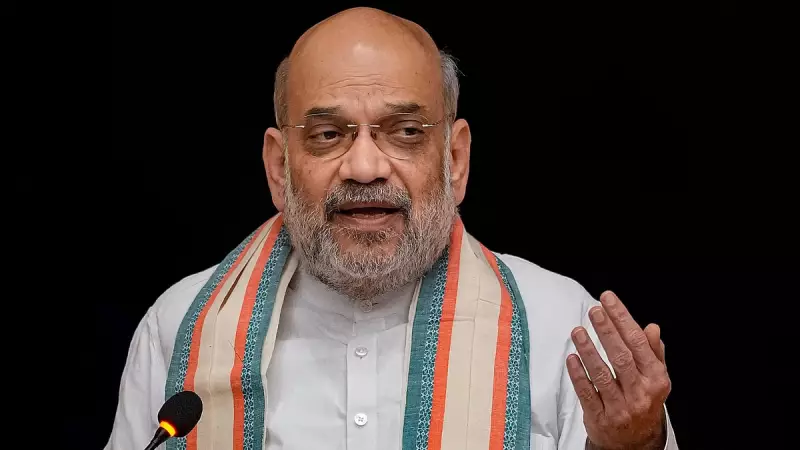
Union Home Minister Amit Shah has made a strong appeal to all Indian states to adopt a common and standardised structure for their Anti-Terrorism Squads (ATS). This crucial directive was delivered during his inauguration of the 'Anti-Terrorism Conference-2025', which was organised by the National Investigation Agency (NIA).
A Unified Front Against Terrorism
Addressing the high-level conference on 26 December 2025, Shah emphasised that a coordinated and uniform approach is essential in the nation's fight against terror. He argued that a common ATS framework across different states would significantly enhance intelligence sharing, operational synergy, and the overall effectiveness of counter-terrorism operations. This move is seen as a step to eliminate procedural gaps that terrorists might exploit due to varying protocols from one state to another.
360-Degree Assault on Organised Crime Announced
In a significant expansion of the security agenda, the Home Minister also revealed plans for a comprehensive "360-degree assault on organised crime." Shah drew a direct link between organised criminal networks and terrorism, highlighting a dangerous pattern. He pointed out that when leaders of these crime syndicates flee the country, they often automatically establish contact with terrorist organisations abroad.

This nexus poses a severe national security threat, making it imperative to dismantle these networks proactively. The proposed assault indicates a multi-agency, all-round strategy that will likely involve financial investigations, cyber surveillance, and enhanced international cooperation to target the infrastructure of organised crime.
Strengthening India's Security Architecture
The conference, spearheaded by the NIA, serves as a key platform for security experts and agencies to align their strategies. Shah's announcements underscore the government's intent to modernise and integrate India's internal security mechanisms. The push for a standardised ATS and the focused war on organised crime represent two pillars of a broader strategy to pre-empt threats and fortify the country's defences against complex security challenges.
The call for a common ATS structure is expected to lead to detailed consultations between the central government and the states to formulate a implementable model that respects federalism while ensuring a seamless national security response.