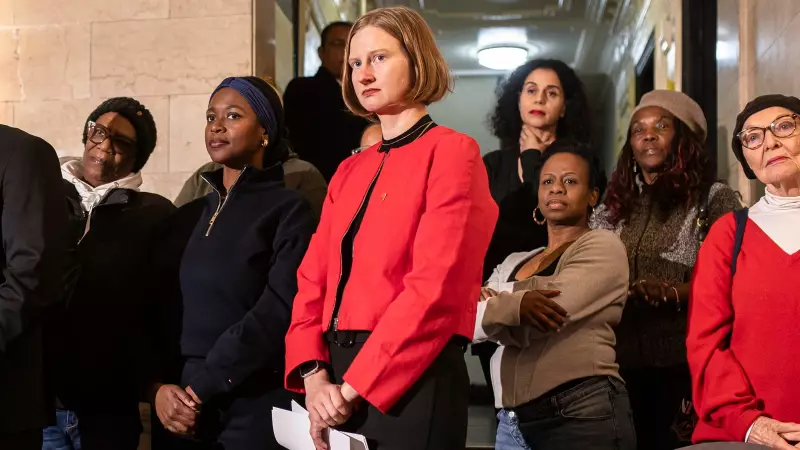
Prominent Ugandan scholar Mahmood Mamdani has stepped forward to defend activist and academic Fatima Rajina, a figure who has long been a lightning rod for controversy. This public show of support comes in the wake of a significant incident at SOAS University of London, where an event featuring Rajina was abruptly cancelled, igniting a fierce debate about free speech, academic freedom, and the boundaries of political discourse on campus.
The Cancelled Event and the Spark of Controversy
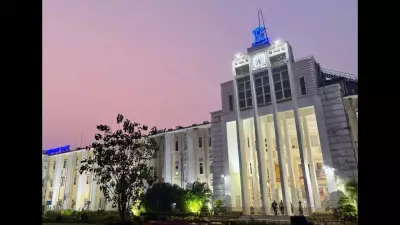
The controversy centres on an event scheduled for February 15, 2024, at SOAS University of London. The discussion, titled 'From the River to the Sea', was to feature Fatima Rajina, a PhD candidate and researcher known for her views on Palestine. However, the university administration called off the event just hours before it was set to begin. The official reason cited was concerns over the safety and security of students and staff.
This decision did not occur in a vacuum. Rajina's public stance and past statements have made her a deeply polarising figure. Critics, including some Jewish student groups, have accused her of expressing views they consider antisemitic or of supporting Hamas, which is designated as a terrorist organisation by the UK government. Her supporters, however, argue that her criticism is directed at the Israeli state and its policies, not at Jewish people, and that she is being unfairly silenced.
Mamdani's Firm Stance and the Principle of Free Speech
Enter Mahmood Mamdani, the celebrated Professor of Government at Columbia University and former director of the Makerere Institute of Social Research. Mamdani, who was slated to chair the cancelled SOAS event, has taken a unequivocal stand. He condemned the university's decision as an act of "censorship" and a failure to uphold the fundamental principle of free speech within an academic institution.
In his defence of Rajina, Mamdani draws a clear line. He argues that the conflation of criticism of Israel with antisemitism is a dangerous tactic that stifles necessary political debate. "The purpose of branding critics of Israel as antisemitic is to silence them, not to engage with their criticism," he stated. For Mamdani, the issue transcends the individual case of Rajina; it is about protecting the university as a space where difficult, contentious, and uncomfortable ideas can be discussed openly and challenged intellectually, rather than suppressed.
Mamdani's involvement carries significant weight. As a scholar who has extensively studied the politics of identity, violence, and colonialism, particularly in Africa, his perspective frames the incident as part of a broader global pattern where institutions capitulate to external pressure, often at the cost of their core academic values.
Broader Implications and the Ongoing Debate
The fallout from the SOAS cancellation has rippled far beyond the university's walls. It has become a flashpoint in the ongoing and highly charged discussions that have intensified since the October 7 Hamas attack on Israel and the subsequent war in Gaza. Universities worldwide, particularly in the US and UK, find themselves on the front lines, struggling to balance commitments to free expression with concerns about hate speech, student safety, and legal obligations.
The case of Fatima Rajina, amplified by Mahmood Mamdani's defence, highlights several critical questions:
- Where should universities draw the line between protecting students and upholding free inquiry?
- How should institutions navigate highly polarised geopolitical conflicts that spill onto campus?
- Does pre-emptive cancellation based on potential disruption set a dangerous precedent for academic discourse?
While SOAS has stated its commitment to free speech alongside its duty of care, critics like Mamdani see the cancellation as a surrender. The incident underscores the immense pressure educational institutions face from various stakeholders, including donors, politicians, activist groups, and students themselves. The debate over Rajina's voice is, in essence, a proxy for a much larger battle about the soul of the university in turbulent times. As the lines between political activism, academic scholarship, and personal safety continue to blur, the need for clear, principled leadership—of the kind Mamdani is advocating—becomes ever more apparent.