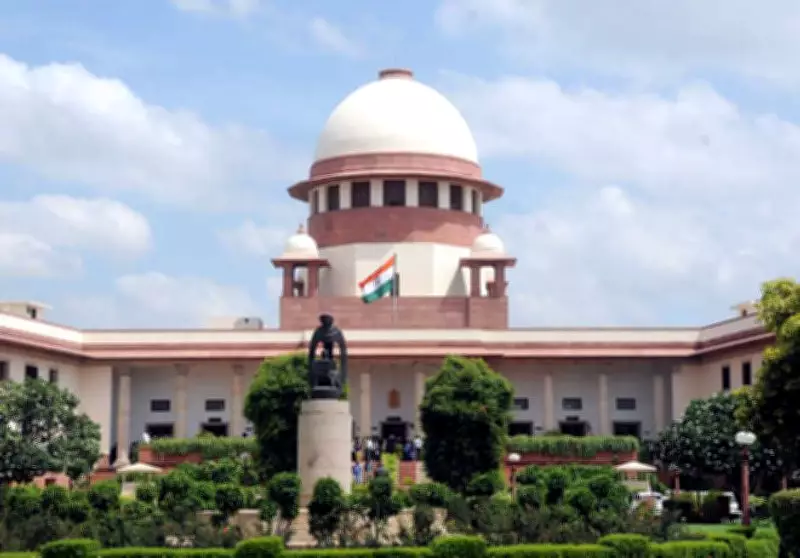
The Supreme Court of India has called for a fundamental change in approach to address the mounting pendency of over 5.61 crore cases across the country's judiciary. A bench led by Justice PS Narasimha and Justice Alok Aradhe emphasized that the legal profession must share responsibility for reducing delays and improving efficiency, marking a shift from viewing pendency solely as a judicial concern.
Current Pendency Figures
As of July 8, 2026, district courts across India have more than 4.97 crore pending cases, comprising 1.12 crore civil and 3.85 crore criminal matters. The 25 high courts are burdened with over 64.53 lakh cases (44.96 lakh civil and 19.57 lakh criminal), while the Supreme Court itself has 95,268 pending cases (73,671 civil and 21,597 criminal).
"There is no dispute that mounting pendency of cases across District Courts, High Courts and the Supreme Court poses one of the greatest challenges to the justice delivery system in India," the bench observed. "The constitutional courts have rightly assumed responsibility for addressing this problem and judges at all levels remain deeply concerned about delays and arrears. Yet, pendency continues to be viewed almost exclusively as a judicial responsibility."

Bar as an Equal Partner
The court highlighted that despite frequent references to the Bar and Bench as the two wheels of the chariot of justice, the Bar is seldom called upon to share responsibility for reducing delays and improving efficiency. "This approach overlooks a fundamental reality that the Bar is not merely a stakeholder but an equal institutional partner in the administration of justice," the bench said. "A paradigm shift is necessary."
The Supreme Court stressed that tackling pendency must become a collaborative mission of the Bench and the Bar. "Through coordinated planning, institutional commitment, and shared accountability, meaningful access to justice can be achieved. The first step is to equip and train lawyers to work as a team and then to work with courts and judges for effective and efficient delivery of justice."
Renewed Sense of Duty
The court underscored a compelling need to kindle among advocates a deeper and renewed sense of bond and shared responsibility for timely disposal of cases. "Reducing pendency is as much the duty of the Bar as it is of the Bench," it added.
To achieve these objectives, the court recommended institutionalising "future continuous" learning for lawyers, moving away from episodic seminars and conferences toward more serious and committed learning.
National Legal Academy Proposed
Highlighting the lack of institutionalised learning for advocates, the Supreme Court asked the Bar Council of India (BCI) to establish a National Legal Academy for advocates on the lines of the National Judicial Academy, which trains judges. The BCI regulates the legal profession in the country.
The court's remarks come as part of a broader effort to reform the justice delivery system, with the judiciary seeking active participation from the legal community to tackle the unprecedented backlog of cases.