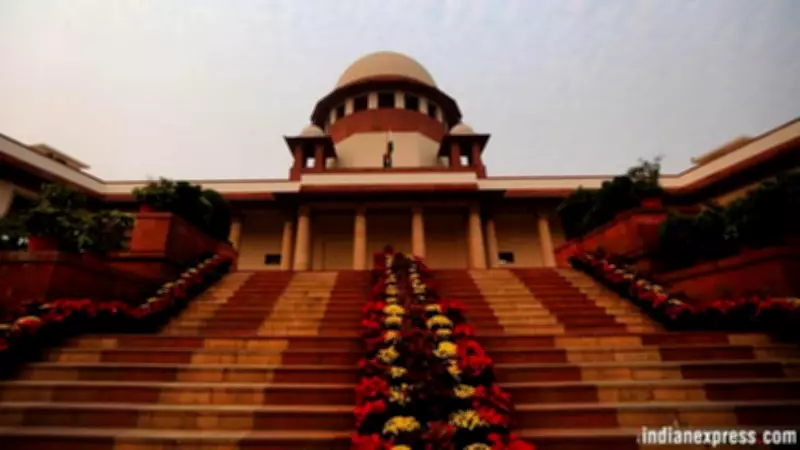
In a significant legal development, the Supreme Court has delivered a setback to the Enforcement Directorate (ED) by dismissing its appeal against a Bombay High Court order. The apex court upheld the High Court's decision that declared the arrest of former Vasai Virar City Municipal Corporation (VVCMC) commissioner Anilkumar Khanderao Pawar as "illegal".
Background of the Case
The case revolves around allegations of corruption and money laundering linked to illegal construction approvals in the Vasai-Virar region of Maharashtra. According to the ED, Anilkumar Khanderao Pawar was arrested in connection with alleged bribes received for approving the illegal construction of 41 residential and commercial buildings.
Financial Allegations and Arrest Details
The central agency claimed that the total proceeds of crime amounted to Rs 300.92 crore, with approximately Rs 169 crore allegedly linked to Pawar. The ED arrested Pawar on August 13, along with several other individuals including Y S Reddy (suspended deputy director of town planning at VVCMC), Sitaram Gupta (a former corporator), and his nephew Arun Gupta.
Bombay High Court's Ruling
On October 15, 2025, a Bombay High Court bench comprising Chief Justice Shree Chandrashekhar and Justice Gautam A Ankhad ordered Pawar's release under specific conditions. The court refused the ED's request to stay the operation of its order, delivering a detailed judgment that questioned the legality of the arrest.
Key Observations by the High Court
The High Court made several critical observations in its ruling:
- There was "no tangible material" with the ED against Pawar at the time of his arrest as required under Section 19 of the Prevention of Money Laundering Act (PMLA)
- The court termed Pawar's arrest as "illegal" and ordered the quashing and setting aside of remand orders
- There was "no material on record" to show that proceeds of crime generated by the sale of the 41 illegal buildings had reached Pawar
Supreme Court Proceedings
Dissatisfied with the High Court's decision, the ED approached the Supreme Court with an appeal challenging the release order. Additional Solicitor-General Davinder Pal Singh represented the ED, arguing that the High Court had erred in passing such a verdict.
Legal Arguments and Final Decision
Senior advocate Rajiv Shakdher, along with advocate Ujjwalkumar Chavhan, opposed the ED's appeal on behalf of Pawar. After hearing detailed submissions from both sides, a Supreme Court bench of Justices Vikram Nath and Sandeep Mehta delivered their verdict.
The bench stated clearly: "We are not inclined to interfere with the impugned judgment and order passed by the High Court. The Special Leave Petition is, accordingly, dismissed." This decision marks a significant affirmation of the High Court's ruling and represents a notable development in this high-profile money laundering case.
Implications and Context
This case highlights the ongoing legal scrutiny of enforcement actions under the Prevention of Money Laundering Act. The Supreme Court's decision to uphold the Bombay High Court's order emphasizes the importance of proper procedure and evidentiary standards in arrest procedures under PMLA provisions.
The ruling comes at a time when enforcement agencies' powers and procedures are under increased judicial examination, particularly regarding the balance between investigative authority and individual rights. The dismissal of the ED's appeal reinforces the judiciary's role in ensuring that enforcement actions comply with legal requirements and evidentiary standards.