

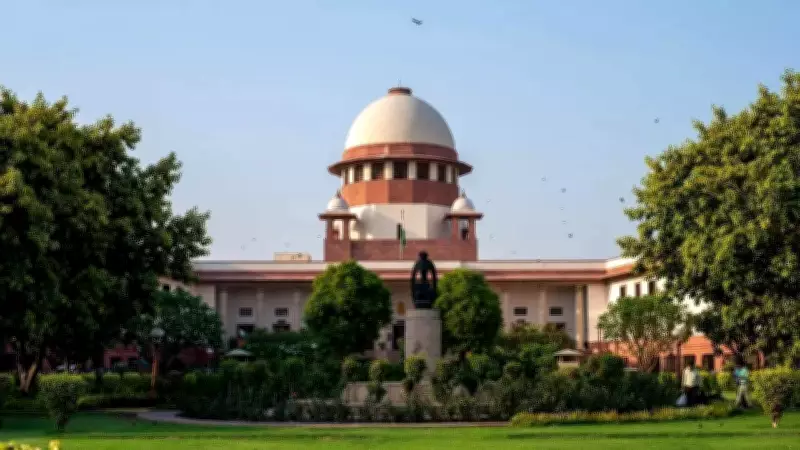
The Supreme Court on Monday agreed to examine the constitutional validity of the Transgender Persons (Protection of Rights) Amendment Act, 2026, following a batch of petitions challenging the new provisions. The amendments nullify the principle of self-perceived gender identity and strip statutory recognition from trans men and trans masculine identities.
Petitioners Argue Violation of NALSA Judgment
Senior advocate A M Singhvi, leading a group of advocates including Shraddha Deshmukh, Jyana Kothari, and Arundhati Katju, argued before a bench of Chief Justice Surya Kant and Justice Joymalya Bagchi that the amended clauses directly breach the Supreme Court's 2014 judgment in the NALSA case. That judgment upheld the right to self-determination of gender for the transgender population.
"The NALSA judgment, which provided for self-identification and self-determination, has been nullified by the legislature without removing its basis, which is impermissible," Singhvi said.

Court's Observations on Self-Determination
Justice Bagchi noted that the NALSA judgment recognized self-determination as a facet of dignity. However, the amendment changed the substratum of law by replacing self-identification with medical identification and verification prior to certification. Singhvi emphasized that the overwhelming characteristic of the amendment is the shift from self-determined gender to medical verification, and that hormone therapy to align gender identity with self-determined gender is criminalized, thereby depriving individuals of treatment.
Solicitor General Tushar Mehta interjected, clarifying that what is criminalized is forceful change of gender through surgery, citing instances of child castration. "The law penalizes forcible gender alterations," Mehta said.
Welfare Schemes and Identity Cards
The CJI-led bench inquired whether any benefits or social welfare schemes under the Transgender Act apply to those classified as transgender. Singhvi responded that while there are no direct benefits, the Act allows them to obtain identity cards, which ensures their inclusion in all welfare schemes.
Notice Issued to Centre and States
The Supreme Court issued notice to the Centre and state governments, seeking their responses within six weeks. The case has been posted for further hearing before a three-judge bench.






