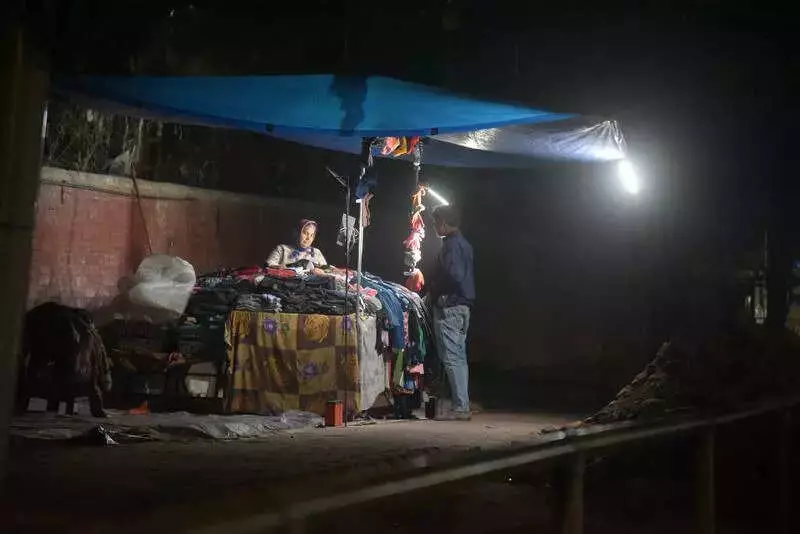
In a decisive move to reclaim public spaces, the Supreme Court of India has issued a strict 48-hour ultimatum to unauthorized street vendors operating in Chandigarh's Manimajra area. The apex court has ordered these vendors to immediately remove their wares from public paths and roads and relocate to their allotted sites in the designated vending zone.
Court's Directives and Compliance Deadline
The bench, comprising Justice Sanjay Karol and Justice Nongmeikapam Kotiswar Singh, passed the order while hearing a Special Leave Petition (SLP). The court mandated the Chandigarh administration to launch a special drive to clear all encroachments. Furthermore, the administration must submit a detailed compliance report via an affidavit by Thursday.
The order stated, "Needless to add, the authority shall also carry out a special drive for removing all encroachments and removing such of those vendors who are selling their wares at unauthorised sites." For vendors yet to receive an allotted space, the court advised them to pursue the matter with the concerned authorities for a decision as per law.

Background of the Legal Battle
The case reached the Supreme Court after the Manimajra Vyapar Mandal and Residential Welfare Association challenged a Punjab and Haryana High Court order from May 23. The petitioners had complained that fruit vendors, rehri owners, hawkers, and squatters were creating traffic hazards, public nuisance, and hindering free movement on roads and public land in Manimajra. They also alleged an adverse impact on their businesses and labeled some vendors as part of a "mafia."
However, the High Court had dismissed their plea, imposing a cost of Rs 50,000 each on the petitioner unions, to be deposited with the Municipal Corporation for street vendor welfare. The HC bench had expressed sympathy for the vendors, remarking that the court could not ignore an "elite class still following the British, who look down their own countrymen doing small business."
Significance and Expected Impact
This Supreme Court intervention is significant due to the large-scale encroachment on public property in a key area of Chandigarh. The directive aims to strike a balance between regulating urban space and protecting the livelihoods of street vendors by ensuring they operate from authorized zones. The next few days will be crucial for compliance and for understanding the long-term resolution for vendors awaiting official allotments.