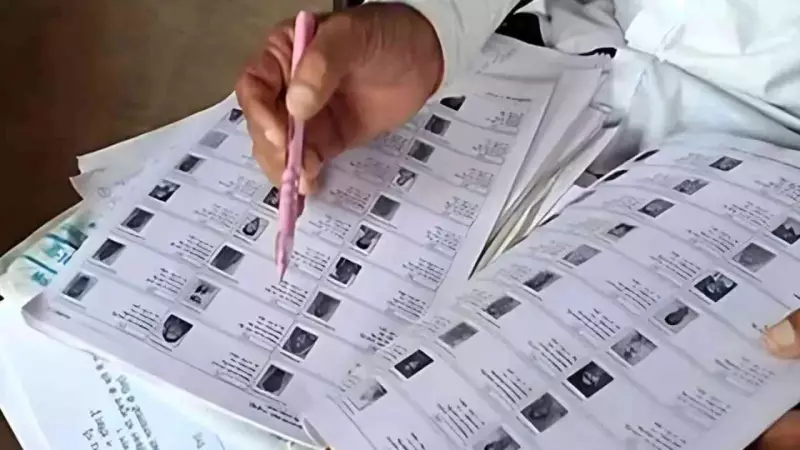
The Supreme Court of India has stepped in to address a critical issue concerning thousands of individuals from persecuted minority communities in neighbouring countries who are awaiting Indian citizenship. The court has agreed to examine a plea seeking their inclusion in electoral rolls while their citizenship applications are processed.
Bench Sets Hearing Date for Crucial Petition
On Monday, a bench led by Chief Justice of India Surya Kant and comprising Justice Joymalya Bagchi took note of the submission made by senior advocate Karuna Nundy. Nundy was representing the NGO 'Aatdeep'. The bench decided to schedule the matter for a detailed hearing on December 9, 2024. Notably, this plea will be heard alongside other petitions that have challenged the ongoing Special Intensive Revision (SIR) of the voter list in West Bengal.
The Core of the NGO's Argument
The petition highlights a pressing situation faced by approximately 50,000 applicants. These individuals, belonging to Hindu, Sikh, Christian, Buddhist, Parsi, and Jain communities from Afghanistan, Bangladesh, and Pakistan, entered India on or before December 31, 2014. Under the provisions of the Citizenship Amendment Act (CAA), 2019, they are entitled to protection and a pathway to Indian citizenship.

The NGO pointed to Section 6B of the CAA, arguing that while many have submitted applications for registration certificates, the actual certificates have not been issued. This delay, combined with the ongoing voter list revision, has created a precarious legal limbo.
Risk of Statelessness and Disenfranchisement
The plea paints a stark picture of the potential consequences. It states that the delay in issuing citizenship certificates, coupled with the non-acceptance of acknowledgment receipts during the SIR, has sparked a serious constitutional crisis.
"The affected persons, already recognised by Parliament as persecuted minorities... are now exposed to the risk of statelessness, social exclusion, and disenfranchisement," the petition warned. Essentially, people whom Indian law has identified as deserving protection are being stripped of a fundamental democratic right—the right to vote.
The NGO proposed a pragmatic solution. It argued that the acknowledgment receipt generated after online submission under the Citizenship (Amendment) Rules, 2024, should be treated as valid provisional proof. At least for limited civil purposes like inclusion in electoral rolls during the revision, this receipt should suffice until a final decision on their citizenship is made.
The Supreme Court's hearing on December 9 will now determine whether these 50,000 applicants, caught in procedural delays, can secure their place in the voter list and avoid being rendered voiceless in the world's largest democracy.