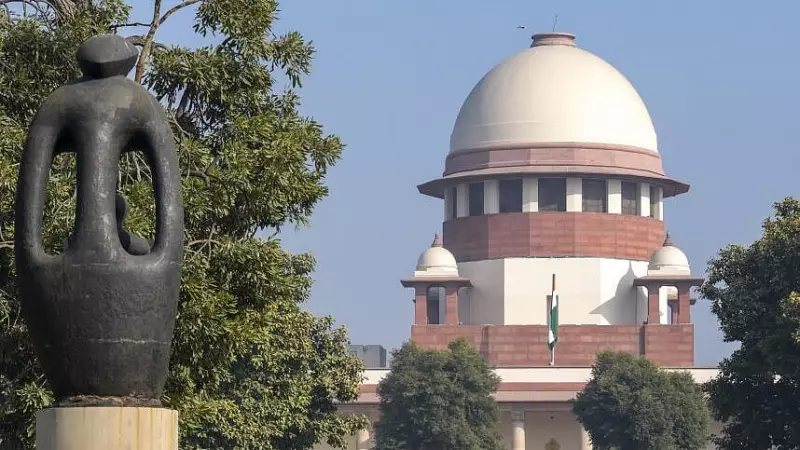
In a significant development for gender inclusivity, the Supreme Court of India has taken up a petition seeking provisions to include 'intersex' persons in the national census. The plea was presented before the court, which has decided to refer it to a three-judge bench for detailed consideration.
Court Proceedings and Government's Stance
The hearing saw a notable submission from Solicitor General Tushar Mehta, representing the Central government. He did not oppose the petition and acknowledged its importance. Mehta submitted before the court that the matter, having been duly seen, could be listed for hearing before a three-judge bench. This indicates a receptive approach from the government's side regarding the legal recognition of intersex individuals in official population counts.
The petition, which aims to amend census protocols to formally acknowledge the intersex community, was filed to ensure accurate demographic representation. The move is seen as a crucial step towards the legal and social recognition of a community that has historically remained invisible in official statistics.
Implications for the Intersex Community
If accepted, the inclusion of a distinct 'intersex' category would mark a historic shift in India's data collection methodology. It would formally recognize individuals born with variations in sex characteristics that do not fit typical binary notions of male or female bodies. This legal recognition through the census is often the first step towards enabling targeted policy-making, resource allocation, and protection of rights.
The Supreme Court's decision to place the matter before a three-judge bench underscores the constitutional and legal significance of the issue. A larger bench is typically constituted for matters involving substantial questions of law or for reconsidering past judgments.
The Path Forward
The development, reported on 16 December 2025, builds upon India's evolving jurisprudence on gender identity and rights. The Supreme Court has previously delivered landmark judgments recognizing the rights of transgender persons. This plea seeks to extend that framework to specifically include intersex individuals within the ambit of official documentation.
The next steps will involve detailed arguments before the three-judge bench, where the petitioners will have to establish the necessity and legal grounds for modifying the census format. The government's formal response and any proposed mechanisms for implementation will also be closely watched by rights activists and the community.
This judicial consideration represents a potential watershed moment for inclusivity, aiming to ensure that every citizen is counted and recognized for who they are.