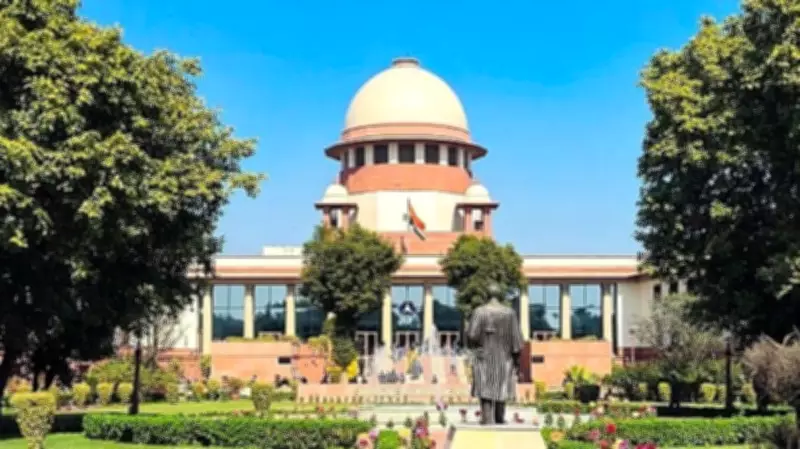
Supreme Court to Examine Plea Against Bombay HC's Verdict on IT Fact Check Rules
The Supreme Court of India has agreed to examine a crucial plea that challenges the recent verdict by the Bombay High Court, which struck down key provisions of the Information Technology (IT) rules pertaining to government-appointed fact check units. This development marks a significant legal battle over digital governance and freedom of expression in the country.
Solicitor General Urges Stay on High Court Judgment
Solicitor General Tushar Mehta, representing the Central government, has formally urged the Supreme Court to consider staying the Bombay High Court's judgment. In his submission, Mehta argued that the high court's decision could have far-reaching implications for the government's ability to combat misinformation and fake news online, potentially undermining public order and national security.
The Bombay High Court, in its ruling delivered earlier this month, declared certain sections of the IT rules unconstitutional, citing concerns over overreach and potential infringement on free speech. The court emphasized that the rules, as framed, granted excessive power to fact check units without adequate safeguards, risking arbitrary censorship and chilling effects on digital discourse.
Background of the IT Rules and Fact Check Units
The contested IT rules were introduced by the government to establish a framework for fact check units aimed at identifying and flagging false or misleading content on social media platforms and digital news portals. Proponents argue that these units are essential for maintaining informational integrity in an era of rampant disinformation, while critics contend they could be misused to suppress dissent and control narratives.
Key aspects of the rules include:
- Empowering government-designated fact check units to label content as "fake" or "misleading."
- Requiring digital platforms to take down or demote such content upon notification.
- Providing legal immunity to platforms that comply with these directives.
The Bombay High Court's verdict struck down these provisions, ruling that they violated constitutional guarantees of free speech and due process. The court noted that the rules lacked transparency, independent oversight, and clear criteria for determining what constitutes false information, making them susceptible to abuse.
Legal and Political Implications
The Supreme Court's decision to hear the plea sets the stage for a landmark judgment that could reshape India's digital regulatory landscape. Legal experts anticipate that the case will delve into complex issues balancing state interests in regulating online content with fundamental rights to freedom of expression and privacy.
If the Supreme Court grants a stay on the Bombay High Court's judgment, it would temporarily reinstate the IT rules, allowing fact check units to operate pending a final resolution. Conversely, upholding the high court's verdict could force the government to revise the rules or seek alternative legislative measures to address misinformation.
This case has attracted widespread attention from media organizations, civil society groups, and tech companies, all of whom have a stake in the outcome. Stakeholders are closely monitoring the proceedings, as the Supreme Court's ruling could influence similar legal challenges and policy debates globally regarding online content moderation.
The hearing is expected to proceed in the coming weeks, with both sides preparing detailed arguments. The Supreme Court's examination will likely focus on the constitutional validity of the IT rules, the scope of governmental authority in digital spaces, and the need for robust safeguards to prevent misuse.
As the legal process unfolds, this case underscores the ongoing tension between regulatory efforts to ensure online safety and the imperative to protect democratic freedoms in the digital age.