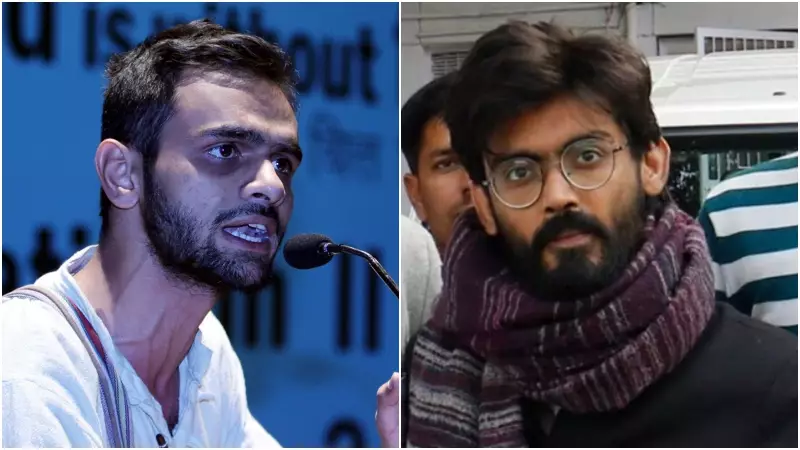
The Supreme Court of India is poised to deliver a crucial judgment on Monday, January 5, 2026, that will determine the fate of seven individuals, including student activists Umar Khalid and Sharjeel Imam, accused in the larger conspiracy behind the February 2020 Northeast Delhi riots. The central legal and moral question before the court is whether keeping accused persons behind bars for over five years without the commencement of trial amounts to a "pre-trial conviction."
The Core Legal Battle: Bail vs. Stringent UAPA Charges
A bench comprising Justices Aravind Kumar and N V Anjaria, which reserved its verdict on December 10, 2025, will decide if the accused are entitled to bail or must remain in custody due to the gravity of charges under the stringent Unlawful Activities (Prevention) Act (UAPA). The accused have challenged a Delhi High Court order from September 2, 2025, which rejected their bail applications.
The batch of petitions includes pleas by Umar Khalid, Sharjeel Imam, Gulfisha Fatima, Meeran Haider, Shifa-Ur-Rehman, Mohd Saleem Khan, and Shadab Ahmed. They are charged under Section 15 of the UAPA, which defines a terrorist act as one intended to threaten India's unity, integrity, security, or sovereignty, or to strike terror among its people.

Defence Arguments: "Gandhian Methods" and a "Caricature of Justice"
During hearings that began on October 31, the defence counsel mounted a vigorous challenge against the prolonged incarceration. Senior Advocate Kapil Sibal, representing Umar Khalid, argued there was no evidence linking his client to any violence, noting Khalid was not in Delhi when the riots erupted. Sibal emphasized that Khalid's speech in Amravati advocated for "Gandhian methods" of civil disobedience like chakka jam (road blockade), which he contended is a legitimate democratic protest, not a terrorist act.
For Gulfisha Fatima, Senior Advocate Abhishek Manu Singhvi argued that detaining students for over five years without trial makes a "caricature of our criminal justice system." He pointed to the precedent of co-accused Devangana Kalita, Natasha Narwal, and Asif Iqbal Tanha, who were granted bail in 2021 on similar allegations.
Representing Sharjeel Imam, Senior Advocate Siddharth Dave argued that while his client's speeches might be unpalatable, they did not incite violence. He stated Imam was already in custody for other cases when the riots occurred and has been branded an "intellectual terrorist" without conviction.
Prosecution's Stance: A "Pre-Planned" Conspiracy for "Regime Change"
Countering these arguments, the Delhi Police, represented by Solicitor General Tushar Mehta and Additional Solicitor General S V Raju, characterized the riots not as spontaneous protests but as a sinister plot to orchestrate a "regime change." They drew parallels to events in Bangladesh and Nepal.
ASG Raju argued that "educated terrorists are more dangerous" than foot soldiers as they plan the conspiracy. The prosecution cited protected witness statements, WhatsApp chats, and video clips of Imam's speeches—including those about cutting off the "Chicken Neck" corridor—as evidence. They alleged the protests against the Citizenship Amendment Act were a facade for a calculated attempt to paralyze the government, timed with the visit of then-US President Donald Trump.
The police contended that under Section 43D(5) of the UAPA—which makes bail exceedingly difficult if accusations appear prima facie true—the accused did not deserve relief. They also blamed the accused for the trial delay, alleging they filed successive applications to defer proceedings. The defence denied this, attributing the stall to the police filing multiple supplementary charge sheets over the years.
The Supreme Court's verdict will thus not only decide the immediate liberty of the seven accused but also provide significant interpretation on the limits of pre-trial detention under India's anti-terror laws, balancing national security concerns with fundamental rights to a speedy trial.