Supreme Court Streamlines Voter Verification Process with Judicial Officer Drafting
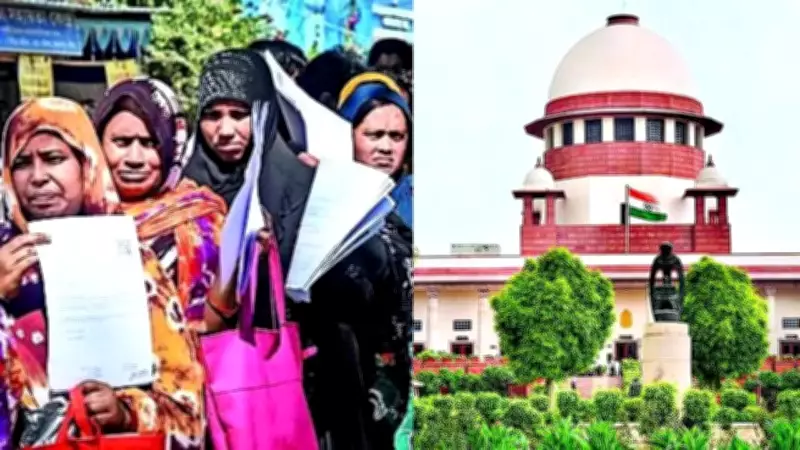
The Supreme Court of India has issued a significant order to accelerate the verification of approximately 50 lakh voters in West Bengal, addressing concerns over the timeline for scrutinizing their documents. The bench, comprising Chief Justice of India Surya Kant and Justices Joymalya Bagchi and Vipul M. Pancholi, took this step after receiving information from the Calcutta High Court Chief Justice regarding the immense workload.
Judicial Manpower and Timeline Challenges
The Calcutta High Court Chief Justice informed the Supreme Court that despite assigning 294 serving and retired district judges and additional district judges to the Special Investigation Report (SIR) work, the process would be protracted. Even if each judicial officer decided 250 cases per day, it would take at least 80 days to scrutinize the documents of the 50 lakh voters. This revelation highlighted the urgency for additional resources to meet electoral deadlines.
Supreme Court's Directive for Expedited Verification
In response, the Supreme Court bench authorized the Calcutta High Court Chief Justice to draft judicial officers with a minimum of three years of experience for the SIR work. Furthermore, the court provided flexibility by allowing the requisition of similarly experienced judicial officers from neighboring states, specifically Jharkhand and Odisha, if more hands are needed to complete the task expeditiously. This move aims to bolster the verification workforce and reduce the timeline significantly.
Voter List Publication and Verification Process
The Supreme Court clarified that the Election Commission will publish the final voter list on February 28, containing the names of all verified voters. However, recognizing that the verification of 50 lakh voters' documents, along with claims, will require additional time, the court stated that supplementary voter lists will be published after February 28. Importantly, invoking its extraordinary powers under Article 142 of the Constitution, the bench declared that these supplementary lists would be deemed part of the final list published on February 28, ensuring legal continuity.
Valid Documents and Aadhaar Clarification
The Supreme Court specified that the 11 documents notified by the Election Commission, along with the Class X exam admit card and marksheet, would be considered valid for claiming inclusion in the voter list. The bench reiterated that Aadhaar would be used solely for identification purposes, not for citizenship claims. "There is no question of Aadhaar being used to claim citizenship," the court emphasized, addressing concerns over misuse. Only cases of voters who submitted their documents by February 14 will be verified by judicial officers for inclusion claims.
Financial Arrangements and Additional Concerns
To facilitate the cross-state deployment of judicial officers, the Supreme Court directed the Election Commission to bear the expenses for lodging and honorarium of officers coming from Jharkhand and Odisha. During the proceedings, advocate Ashwini Upadhyay raised concerns about fake Aadhaar cards, suggesting that many illegal migrants possess Aadhaar cards made in West Bengal, and requested directions to control such fraud.
Court's Response to Aadhaar Fraud Allegations
Chief Justice Surya Kant acknowledged that the issue of fake Aadhaar cards might require a deeper probe but stated that the current proceedings were not the appropriate time for such an investigation. Justice Bagchi suggested a practical way forward, advising Upadhyay to make a representation to Solicitor General Tushar Mehta, who could then forward it to the Union government for appropriate action. This approach ensures that the matter is addressed through proper administrative channels without delaying the voter verification process.
The Supreme Court's order represents a comprehensive effort to balance electoral integrity with practical constraints, ensuring that voter verification is conducted thoroughly while adhering to tight schedules. By leveraging judicial resources across state lines and clarifying document validity, the court aims to uphold the democratic process in West Bengal.