
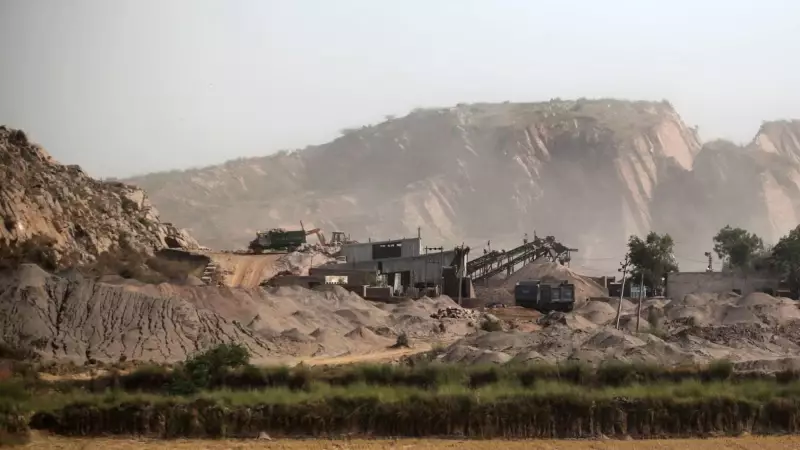
In a significant move for environmental conservation, the Supreme Court of India has put on hold its own previous judgment that accepted a contentious definition of the Aravalli hills. The decision, made on Monday, December 29, 2025, effectively stays an order from November 20 that had raised alarms about potential mining and ecological destruction in the fragile region.
Court Puts Brakes on Controversial '100-Metre' Rule
The heart of the dispute lies in the Centre's proposed definition, known as the '100-metre rule'. This definition, which the top court had initially accepted, sought to define what constitutes the Aravalli hills. Environmentalists and experts had vehemently opposed this, arguing that such a narrow definition would leave vast stretches of the ecologically sensitive Aravalli range unprotected, opening them up to rampant mining activities.
The court's latest intervention has now placed that earlier acceptance in abeyance. Instead of letting the rule stand, the bench has proposed the constitution of a new committee. This panel's primary task will be to reexamine the report of a previous expert group that had originally recommended the 100-metre criterion.
Averting an Ecological Crisis
The immediate consequence of the stay order is the prevention of a potential ecological disaster. The Aravalli range acts as a crucial natural barrier against desertification, a groundwater recharge zone, and a biodiversity hotspot for the National Capital Region and surrounding areas. Widespread mining, which would have become legally easier under the contested definition, threatened to upset the delicate ecological balance of the entire region.
By halting the implementation of the November 20 judgment, the Supreme Court has provided a crucial window for a more thorough and scientifically sound review. The matter is now set for a fresh examination, with the fate of one of North India's oldest mountain chains hanging in the balance.
The Path Forward: A New Committee and Fresh Scrutiny
The Supreme Court's directive to form a committee indicates a return to the drawing board. The earlier panel's report, which formed the basis for the 100-metre rule, will be scrutinized anew. This development is seen as a victory for environmental advocacy groups and citizens who had petitioned the court, highlighting the irreversible damage that unregulated mining could cause.
Legal experts view this as the court adopting a cautious approach, prioritizing precautionary environmental principles over a rigid interpretation that could have led to degradation. The story remains developing as stakeholders await the formation of the new committee and its subsequent findings.