Supreme Court Judges Diverge on Anti-Corruption Law's Key Provision
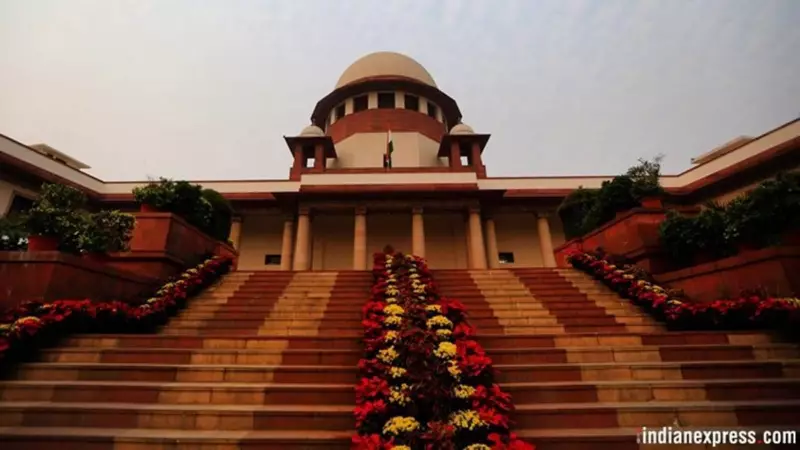
The Supreme Court of India delivered a split verdict on Monday regarding the constitutional validity of Section 17A of the Prevention of Corruption Act, 1988. This crucial provision mandates prior approval from a competent authority before investigating public servants for actions taken during their official duties.
Two Judges, Two Different Views
Justice B V Nagarathna, presiding over a two-judge bench, declared Section 17A unconstitutional. She argued that the provision essentially protects corrupt officials by creating unnecessary hurdles for investigations.
"If an enquiry or investigation is to be made against a public servant lacking integrity, then the requirement of seeking prior approval would actually prevent any such investigation," Justice Nagarathna stated. She emphasized that this could allow corrupt acts to remain hidden.

Justice Nagarathna further explained that the provision primarily benefits higher-ranking officers who make decisions and recommendations. She called this classification unfair and in violation of Article 14 of the Constitution.
The Counter Argument
Justice K V Viswanathan took the opposite position. He upheld Section 17A as constitutionally valid, but with an important condition. He suggested that the grant or refusal of approval should depend on recommendations from the Lokpal or Lokayukta.
"The object of preventing frivolous and vexatious complaints against honest public servants is served by Section 17A," Justice Viswanathan noted. He acknowledged that the statute currently lacks an independent screening mechanism for complaints.
Justice Viswanathan proposed that complaints should first go to an independent agency like the Lokpal. This agency would then recommend whether the government should grant approval for investigation.
Background and Implications
The controversial Section 17A was introduced through a 2018 amendment to the Prevention of Corruption Act. The NGO Centre for Public Interest Litigation challenged this provision before the Supreme Court.
Justice Nagarathna expressed concern that the requirement for prior approval might encourage public servants to make improper decisions. She believed they might feel protected from immediate investigation.
"The requirement of prior approval is contrary to the object and purpose of the Act," she asserted. "It protects the corrupt rather than the honest."
Justice Viswanathan countered that the provision's main purpose is to protect bona fide decisions made by officials and bureaucrats. He stressed that it was never meant to condone improper acts.
What Happens Next?
Following this split verdict, the matter will now go to the Chief Justice of India. The CJI will refer the case to an appropriate bench for a fresh decision. This development keeps the legal status of Section 17A uncertain for now.
The Supreme Court's divided opinion highlights the ongoing debate about balancing two important objectives:
- Protecting honest public servants from unnecessary harassment
- Ensuring effective investigation of corruption cases
Legal experts anticipate that the larger bench will carefully consider both perspectives before reaching a final decision. The outcome could significantly impact how corruption cases against public servants are investigated in India.