Supreme Court Delivers Split Verdict on Anti-Corruption Clause
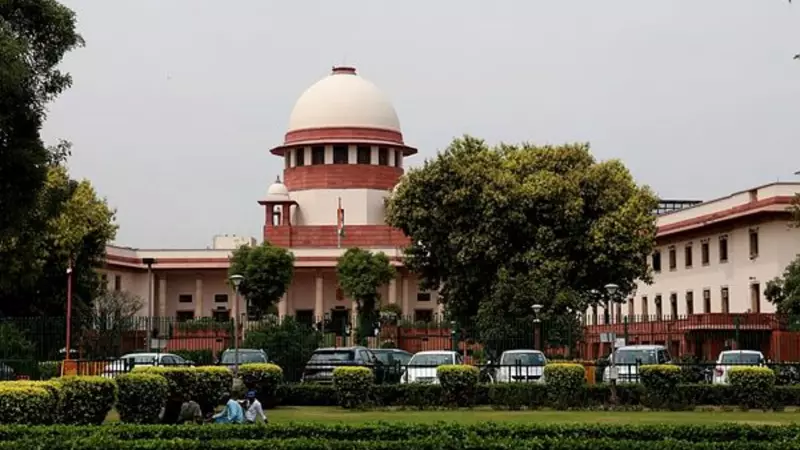
The Supreme Court issued a split verdict last Tuesday on a plea challenging Section 17A of the Prevention of Corruption Act, 1988. This clause mandates prior approval for investigating public servants in their official duties. Justice B V Nagarathna declared the section "unconstitutional" and argued it "protects the corrupt." In contrast, Justice K V Viswanathan upheld its validity, but only if the Lokpal or Lokayukta recommends the sanction.
Now, the case will go to Chief Justice of India Surya Kant for the formation of a larger bench. This legal tussle highlights ongoing debates about accountability and corruption in India.
Corruption Cases Surge Since 1988
Data from the National Crime Records Bureau paints a stark picture. In 1988, when the Act passed, India reported 1,224 corruption cases. That year saw 167 convictions and 93 acquittals, with a conviction rate of 64.5%. It remains the only year where convictions exceeded acquittals.

Since then, corruption cases have more than tripled at the national level. Chargesheets and trials grew almost eight-fold. However, pending trials skyrocketed from 3,378 to 29,484, a nine-fold increase. This backlog strains the judicial system.
Acquittals Outpace Convictions
Despite rising cases, acquittals consistently outnumber convictions. In 2015, cases peaked at 5,250, linked to the India Against Corruption movement. That year, trials completed in 2,100 cases resulted in 788 convictions and 1,312 acquittals, a 37.5% conviction rate.
The conviction rate has not crossed 50% since 1988, dropping to a low of 22.9% in 1999. In 2023, the latest data shows 1,052 convictions versus 1,223 acquittals. Law enforcement detects more corruption, but judicial capacity limits effective outcomes.
Departmental Actions Decline
In 1988, 660 out of 736 arrested public servants faced departmental punishment, a record 89.7%. By 2023, only 638 of 4,759 arrests led to departmental action, a mere 13.4%. This decline raises questions about internal accountability mechanisms.
Parliamentary Debates on Section 17A
Section 17A sparked heated debates when introduced in 2018. Opposition MPs criticized it as a tool to "dodge accountability." Congress leader Adhir Ranjan Chowdhury pointed to a "civil servant lobby" behind the clause. YSRCP MP Geetha Kothapalli warned public servants should not use it to avoid responsibility.
In the Rajya Sabha, CPI(M) MP K K Ragesh argued sanction for investigation is unnecessary, saying, "First, you have to investigate." DMK MP Tiruchi Siva echoed this, fearing it would "fetter" authorities. YSRCP MP Vijaysai Reddy suggested time limits instead of removal.
BJP MP Jitendra Singh defended the amendment, claiming it prevents "frivolous" cases and corruption. He argued random inquiries might worsen corruption rather than curb it.
The split verdict and data underscore challenges in India's fight against corruption. As cases rise, the judicial backlog and low conviction rates call for urgent reforms to strengthen accountability and efficiency.