Supreme Court Questions Self-Declaration Approach for 2027 Caste Census
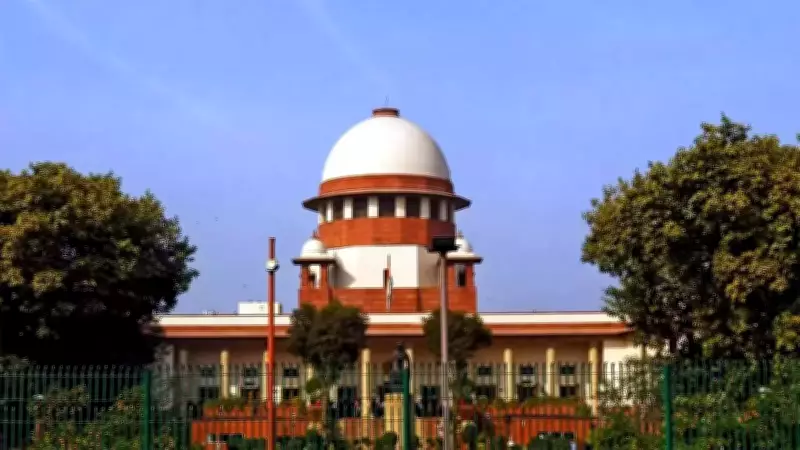
The Supreme Court of India has expressed significant concerns regarding the proposed methodology for caste enumeration in the upcoming 2027 census. During proceedings on Monday, the apex court recorded its agreement with a petitioner's argument that relying solely on self-declaration of caste identity would be insufficient for accurately determining the population of Scheduled Castes (SC), Scheduled Tribes (ST), and Other Backward Classes (OBC).
Petitioner Raises Critical Questions About Census Preparations
Appearing before a bench headed by Chief Justice Surya Kant and comprising Justice Joymalya Bagchi, advocate Mukta Gupta represented social activist Akash Goel. Gupta informed the court that the directorate of census operations, which has already commenced preparatory work for Census 2027, has failed to disclose any predetermined criteria or standardized methodology for recording caste identity of individuals belonging to these crucial categories.
The petitioner emphasized that since caste enumeration would play a pivotal role in multiple critical areas, including:

- Devising and implementing social welfare measures
- Determining reservations in government employment
- Allocating admissions to educational institutions
- Delimitation of parliamentary and assembly constituencies
the data collection process must be scientifically foolproof to ensure accuracy and reliability.
Court's Balanced Response and Direction
The CJI-led bench responded by stating, "In principle we agree with you. But it is the job of the experts, and it is for them to devise the mode and the way caste enumeration is to be carried out."
While the Supreme Court did not entertain the formal plea, it provided a constructive alternative. The bench directed advocate Gupta to submit the petition in the form of a detailed representation to the directorate of census operations for necessary consideration and action.
Court's Order and Confidence in Authorities
In its official order, the bench expressed confidence in the authorities, stating, "We have no reasons to doubt that the respondent authorities, with the aid and assistance of domain experts, must have evolved a robust mechanism in order to rule out any mistake (in caste enumeration) as apprehended by the petitioner."
The court further noted that "The petitioner has flagged relevant issues through earlier representation" and disposed of the writ petition with a specific direction to the respondent authorities to consider the suggestions and issues raised by the petitioner during their planning process.
This development highlights the ongoing debate about methodology for what promises to be one of the most significant demographic exercises in India's history, with far-reaching implications for social justice, political representation, and resource allocation across the nation.