Supreme Court Seeks Government Responses on Freedom of Religion Laws Constitutional Challenge
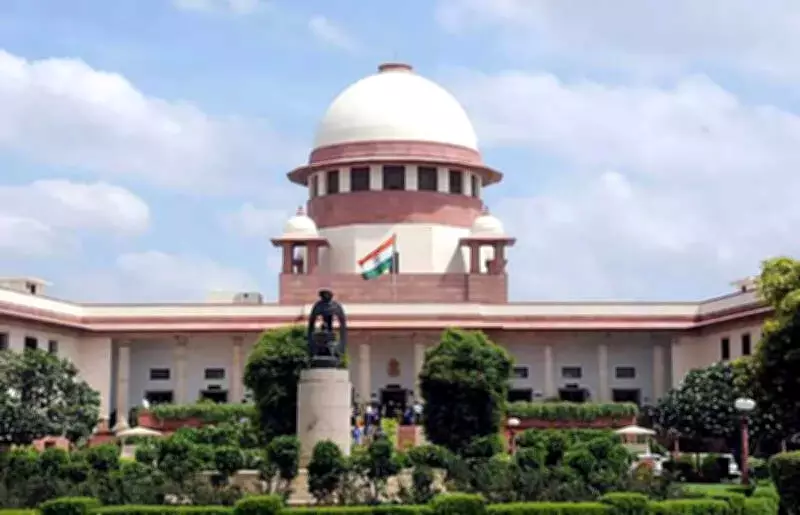
The Supreme Court of India has taken a significant step in addressing constitutional concerns surrounding freedom of religion laws across multiple states. On Monday, the apex court formally sought detailed responses from both the Central government and various state governments regarding a comprehensive petition filed by the National Council of Churches.
Petition Challenges Constitutional Validity of State Conversion Laws
The churches association has raised serious constitutional objections to freedom of religion legislation enacted by numerous states. Their petition argues that these laws fundamentally violate citizens' basic rights by criminalizing voluntary and conscience-based religious conversions. The association contends that requiring prior government approval for conversion represents a direct infringement on individuals' constitutional right to privacy and personal autonomy.
Historical Context and Legal Precedents
One of the specific laws challenged in this petition is the nearly six-decade-old Orissa Freedom of Religion Act of 1967. This legislation represents one of India's earliest attempts to regulate religious conversion through statutory means. Madhya Pradesh followed closely with the enactment of the Chhattisgarh Dharma Swatantrya Adhiniyam in 1968, legislation specifically designed to prevent large-scale conversion of tribal communities.

The Supreme Court previously examined the constitutional validity of both the Orissa and Madhya Pradesh laws in the landmark 1977 case of Rev Stanislaus versus State of Madhya Pradesh. In that historic judgment, the court upheld the laws while making an important distinction: while the right to propagate religion constitutes a fundamental right under the Constitution, this right does not automatically extend to include the right to convert others to one's faith.
Expansion of Freedom of Religion Legislation Across States
The landscape of freedom of religion laws has expanded significantly across India in recent decades. Arunachal Pradesh enacted similar legislation in 1978, followed by Gujarat in 2003 and Himachal Pradesh in 2007. More recently, Jharkhand implemented its version in 2017, Uttarakhand in 2018, and Madhya Pradesh, Uttar Pradesh, and Karnataka all enacted or amended their laws in 2021. Haryana joined this legislative trend in 2022, while Rajasthan passed its freedom of religion law in 2025.
Given the numerous challenges to these state laws pending in various High Courts across the country, the Supreme Court took the significant step in 2023 of transferring all related petitions to itself for consolidated consideration and resolution.
Legal Arguments Presented Before the Court
Representing the churches association, senior advocate Meenakshi Arora presented compelling arguments before the Supreme Court bench. She contended that existing freedom of religion laws operate under a problematic presumption that all religious conversions occur through allurement, fraud, or coercion. This presumption, she argued, leads to requirements for prior intimation, official inquiry, and permission from district magistrates, effectively forcing individuals to justify deeply personal spiritual decisions to government authorities.
In response, Solicitor General Tushar Mehta defended the state laws, asserting that governments have sufficient constitutional basis to enact such legislation. He further argued that a constitution bench of the Supreme Court has already approved the constitutional validity of these laws in previous judgments, and that this established precedent should cover both pending cases and the current fresh challenge.
Specific Constitutional Concerns Raised
The petitioner raised several specific constitutional concerns regarding the implementation and wording of freedom of religion laws. The association argued that these laws deliberately define key terms like "conversion," "allurement," and "inducement" with excessive vagueness, granting uncanalised discretion to enforcement authorities. This ambiguity, they contend, "produces a chilling effect on free speech and religious propagation" by creating uncertainty about what constitutes legal religious activity.

Furthermore, the petition highlighted gender-specific concerns, noting that stricter provisions relating to conversion of women in various state laws effectively "deny women equal decisional autonomy" in matters of faith and conscience.
Patterns of Misuse and Social Consequences
The churches association presented evidence suggesting systematic patterns of misuse in the implementation of these laws across multiple states. According to their submission, "implementation of the impugned Acts across states reveals a uniform pattern of misuse." They documented instances where routine religious activities including worship services, prayer meetings, charitable activities, and even interfaith marriages have been criminalized through expansive interpretations of terms like "allurement" and "inducement."
The petition painted a concerning picture of enforcement mechanisms, stating that "vigilante groups function as de facto enforcers, while police authorities act mechanically on complaints without independent scrutiny." This dynamic, they argued, creates a situation where "state-enabled vigilantism legitimises social hostility, instils fear among minority communities, thereby corroding the secular fabric of the Constitution."
The Supreme Court's decision to seek responses from both central and state governments marks a crucial development in this ongoing constitutional debate. The case promises to address fundamental questions about the balance between religious freedom, state regulation, and individual rights in India's diverse democratic framework.