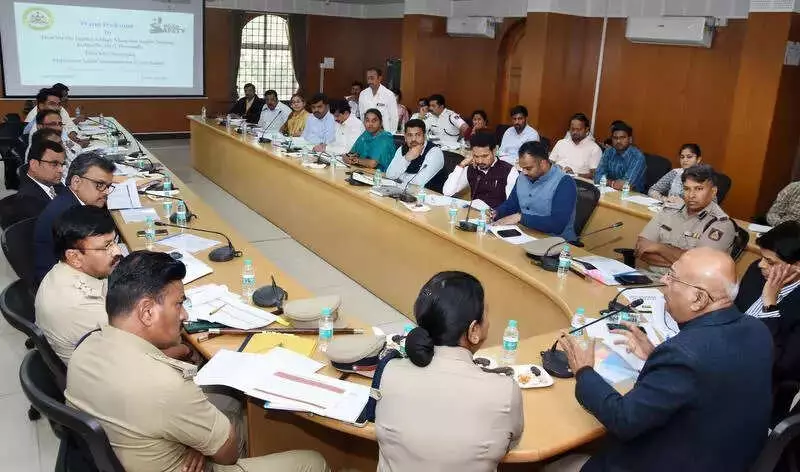
A high-level committee appointed by the Supreme Court of India conducted a critical review of road safety measures in Karnataka's Mandya and Mysuru districts on Saturday. The committee, led by its chairman Justice (Retired) Abhay Manohar Sapre, held extensive discussions with district administrations and officials from key departments, including the National Highways Authority of India (NHAI).
Focus on High-Tech Solutions and Persistent Black Spots
The panel meticulously examined existing safety initiatives, evaluated their impact, and pinpointed areas needing stronger intervention to prevent serious accidents. In Mandya, authorities reported a positive trend: the installation of AI-based traffic cameras on the Bengaluru-Mysuru National Highway (NH-275) has contributed to a reduction in accidents compared to the previous year.
However, the committee observed that accident-prone zones still demand significant improvements. It directed officials to intensify efforts in these areas where collisions persist. The functioning and maintenance of the AI cameras were also scrutinized, with instructions given for regular technical upgrades to ensure effective traffic monitoring and law enforcement.

A major emphasis was placed on curbing over-speeding on NH-275. The committee advocated for enhanced digital speed management systems, stricter enforcement of speed monitoring, and the installation of clear, prominent signboards at locations with a history of frequent accidents. The meeting was attended by Mandya Deputy Commissioner Kumara and Superintendent of Police Mallikarjun Baldandi.
Karnataka's Alarming Rank and a Call for Mindset Change
Justice Sapre underscored the invaluable nature of every human life, stating that the ultimate objective must be to reduce road accident fatalities to zero. He expressed deep concern over the nearly 2 lakh lives lost annually in road accidents across India, labeling it a grave national crisis requiring urgent and sustained attention.
He identified non-use of helmets and seat belts, coupled with over-speeding, as the primary causes of accidents and deaths. Justice Sapre remarked that wearing safety gear is basic knowledge, yet even highly educated individuals die due to negligence. He stressed the need for a fundamental shift in public mindset, urging citizens to follow traffic rules compulsorily. This, he said, can only be achieved through persistent public awareness campaigns and stringent enforcement by police.
The committee highlighted that Karnataka has consistently ranked among the top five states in road accident cases over the past five years. Mysuru district, meanwhile, remains within the top ten districts statewide for accident numbers. Officials were advised to maintain high-quality standards during road construction and take preventive measures to avoid potholes and the creation of accident black spots.
Specific Directives for Mysuru and Rural Focus
Given Mysuru's prominence as a tourist hub, Justice Sapre noted the high volume of private bus movement. He instructed Regional Transport Officers (RTOs) to conduct regular checks to ensure these buses are roadworthy, comply with government regulations, and that drivers possess valid licenses and insurance.
The panel also noted that road accident fatalities are higher in rural areas compared to urban centers. Justice Sapre called for organizing more road safety awareness programs in rural regions and proposed setting up technical traffic parks to attract public participation and educate people about traffic rules in an engaging manner.
During the meetings, Mysuru Deputy Commissioner G Lakshmikantha Reddy presented a detailed analysis of road accidents in the district from 2020 to 2025, covering fatalities, identified black spots, and corrective actions taken. Mysuru City Police Commissioner Seema Latkar briefed the committee on the installation of surveillance cameras at key city locations and steps implemented to reduce accidents on high-risk road stretches.