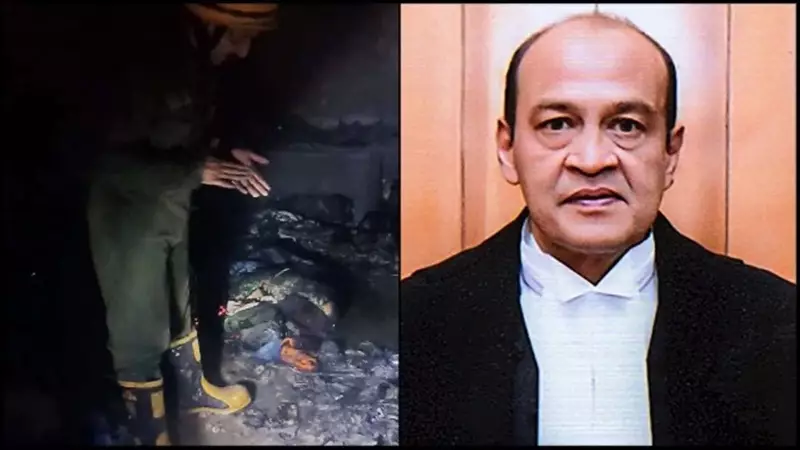
The Supreme Court has firmly dismissed a plea filed by Allahabad High Court judge Justice Yashwant Varma. He challenged the legality of the committee set up to investigate impeachment motions against him. The bench, comprising Justices Dipankar Datta and S C Sharma, delivered its verdict on Friday.
Court Finds No Illegality in Committee Formation
The Supreme Court bench explicitly stated that the Lok Sabha Speaker committed no illegality in constituting the committee. The judges held that Justice Varma is not entitled to any relief. They further declared that no interference by the court is called for in this matter.
Reserving its order on January 8, the bench emphasized the need to balance rights. They noted the judge's right to a fair process and the independent right of Parliament members to move and admit an impeachment motion under the law.
Justice Varma's Legal Arguments
Justice Varma's challenge centered on Section 3(2) of the Judges (Inquiry) Act. He argued that the inquiry committee could only be established after both the Lok Sabha and the Rajya Sabha had accepted the impeachment motion.
He pointed to a specific procedural issue. The Deputy Chairman of the Rajya Sabha decided not to admit the motion in the House. This decision came after the then-Chairman, Jagdeep Dhankar, had resigned. Justice Varma contended that the Deputy Chairman could not have assumed the Chairman's duties. Therefore, he argued the action was ultra vires, or beyond legal power.
Background of the Controversy
The case stems from allegations that emerged last year. Cash was reportedly recovered from Justice Varma's Delhi residence after a fire on the night of March 14-15. At that time, he served as a judge of the Delhi High Court.
The sequence of events unfolded rapidly:
- On March 20, the Supreme Court Collegium proposed Justice Varma's transfer to the Allahabad High Court.
- By March 22, the then Chief Justice had constituted a three-member in-house committee to investigate the allegations.
- This in-house panel found credence in the allegations and forwarded its findings to the President and the Prime Minister.
Justice Varma previously challenged the constitutionality of this in-house inquiry. However, on August 7, 2025, a two-judge bench of the Supreme Court dismissed that challenge. The court found no procedural deviation in the inquiry process.
Parliamentary Proceedings and Committee Composition
Following the in-house inquiry, motions for impeachment were introduced in both Houses of Parliament. The Lok Sabha Speaker then appointed a formal committee under the Judges (Inquiry) Act to investigate the allegations.
This committee includes notable legal figures:
- Justice Manindra Mohan Shrivastava, Chief Justice of the Madras High Court.
- Senior Advocate B V Acharya.
The Supreme Court's latest ruling affirms the validity of this committee's formation. It clears the path for the impeachment inquiry to proceed as per parliamentary procedure.