

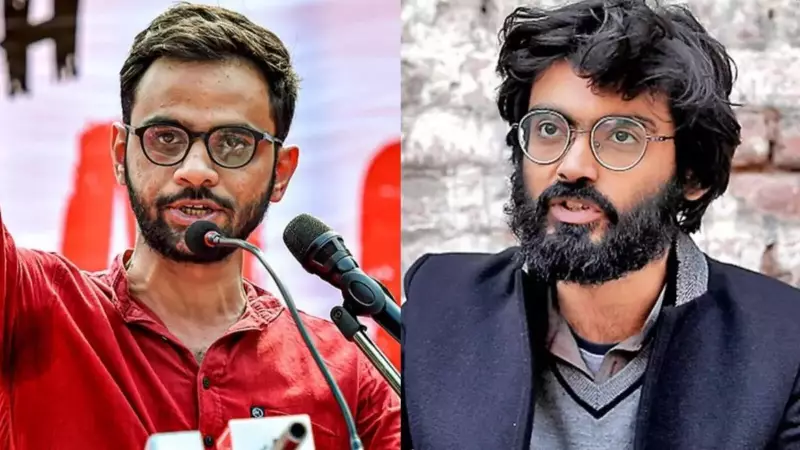
In a significant ruling, the Supreme Court of India on Monday rejected the bail pleas of student activists Umar Khalid and Sharjeel Imam in the high-profile Delhi riots conspiracy case. The court, however, granted bail to five other co-accused in the same matter, highlighting a distinct "hierarchy of culpability" among the accused.
Court Draws Line on Liberty vs National Security
The bench of Justices Aravind Kumar and N V Anjaria held that prolonged incarceration and delays in trial cannot act as an automatic "trump card" for securing bail in offences under the stringent Unlawful Activities (Prevention) Act (UAPA). The court emphasized that while considering bail, a judge cannot treat the liberty of an accused as the sole criterion while pushing societal security to the periphery.
The case stems from the violent communal clashes in Northeast Delhi in February 2020, which occurred during protests against the Citizenship (Amendment) Act and the visit of the then US President Donald Trump. Khalid and Imam, along with others, have been in judicial custody for over five years.

Differential Treatment Based on Culpability
While rejecting bail for Khalid and Imam, the bench granted relief to five other accused: Gulfisha Fatima, Meeran Haider, Shifa-ur-Rehman, Mohd Saleem Khan, and Shadab Ahmad. The court stated that the former two stood on a "different footing" compared to the others based on the evidence presented.
The judges directed that Khalid and Imam could file fresh bail applications after one year or after all protected witnesses have been examined, whichever is earlier. This implies they may have to spend at least another year in prison.
Balancing Constitutional Rights and Stringent Laws
The judgement delves deeply into the tension between an accused's fundamental right to a speedy trial under Article 21 of the Constitution and the strict bail conditions imposed by special laws like the UAPA. The court referred to its own 2021 precedent which stated that the rigours of UAPA's Section 43D(5) should "melt down" where trial is unlikely to conclude within a reasonable time and incarceration has exceeded a substantial part of the possible sentence.
However, the bench clarified that this does not establish a mechanical rule where mere passage of time determines bail in every special law case. It stated that the jurisprudence does not support a construction where delay alone overrides a statutory regime enacted by Parliament for special category offences.
"The proper question is how Article 21 is to be applied where Parliament has expressly conditioned the grant of bail in relation to offences alleged to implicate national security," the court observed. It advocated for a disciplined judicial scrutiny that gives due regard to both constitutional rights and statutory conditions, rejecting an "either-or" approach.
The court also noted that Khalid and Imam had contributed to the delay in the trial process, a factor that weighed against them. This ruling underscores the ongoing judicial struggle to harmonize individual liberties with the state's mandate to tackle offences threatening national security, setting a nuanced precedent for future UAPA bail hearings.






