Supreme Court Declines to Hear Plea Against Vande Mataram Circular
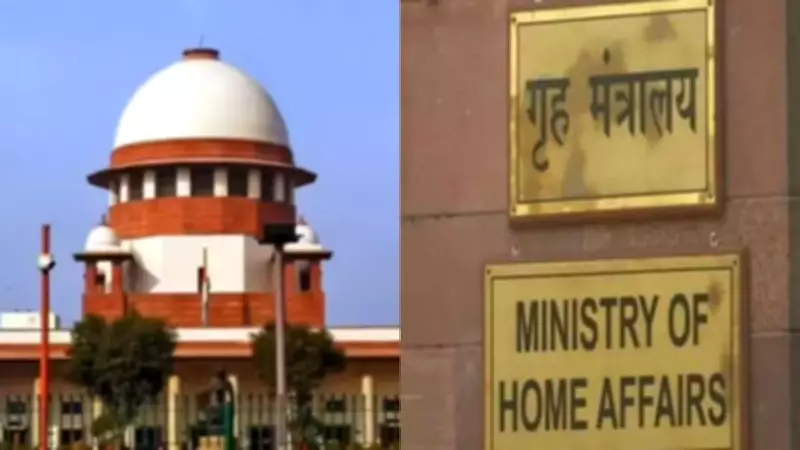
The Supreme Court of India on Wednesday refused to entertain a petition challenging a home ministry circular regarding the singing of the national song 'Vande Mataram' at official events. The court clarified that the directive is not mandatory and described the petition as premature, based on what it termed a "vague apprehension of discrimination."
Bench Questions Premature Nature of Petition
A bench comprising Chief Justice Surya Kant, Justice Joymalya Bagchi, and Justice Vipul M. Pancholi was hearing the plea filed by Muhammed Sayeed Noori. Senior advocate Sanjay Hegde, representing the petitioner, argued that while they respect all religions in the country, compelling individuals to sing the song irrespective of their religious beliefs could be seen as forcing participation in a "social demonstration of loyalty."
The court directly questioned whether the circular imposed any penalties for not singing the national song. Justice Bagchi specifically asked if there were any consequences or if anyone had been removed from their position for non-participation. In response, Hegde stated, "Penalty is there in case of disruption. While there may be no legal sanction, there is always a huge burden for someone who refuses to sing or stand up. Can people be compelled to sing the song in the garb of an advisory?"

Court Emphasizes Non-Mandatory Language of Directive
Chief Justice Kant further inquired whether any notice had been issued to the petitioner forcing anyone to sing the song. Referring to the directive, Justice Bagchi highlighted that Clause 5 of the Union Government directive uses the word 'may', indicating it is permissive rather than obligatory. He explained, "This freedom is as much to sing the national song as not to sing. That is why it does not fall foul of legal rights."
The bench concluded that the petitioner could approach the court in the future if any action was taken against him. For the present, the court ruled that the plea was based solely on apprehension and did not warrant judicial intervention. This decision underscores the court's stance on interpreting government advisories as non-compulsory unless explicitly stated otherwise.
Background and Implications
The home ministry circular in question has been a topic of discussion regarding national symbols and individual freedoms. The Supreme Court's refusal to hear the plea reinforces the principle that such directives are advisory in nature, allowing individuals the choice to participate without fear of legal repercussions. This ruling may set a precedent for similar cases involving national ceremonies and personal liberties.
The court's emphasis on the non-mandatory aspect of the circular aims to balance national sentiment with constitutional rights, ensuring that expressions of patriotism remain voluntary rather than imposed.