Supreme Court Declines to Hear Plea on Parole Extension in Priyadarshini Mattoo Case
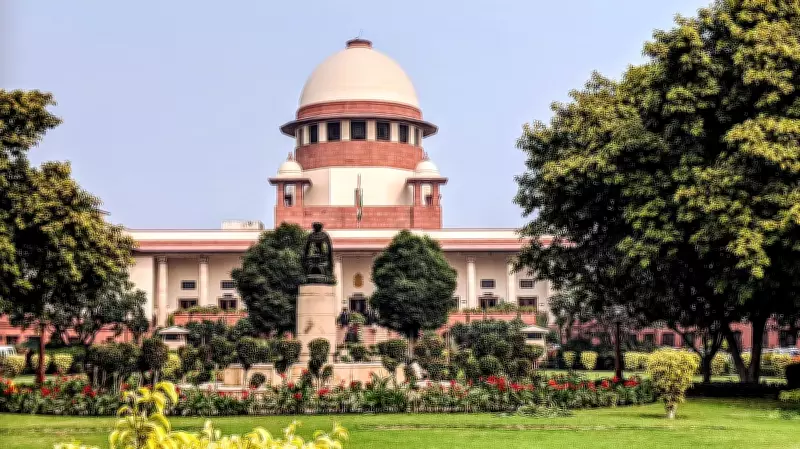
The Supreme Court of India has refused to entertain a plea challenging the denial of an extension of parole for a convict involved in the high-profile Priyadarshini Mattoo case. This decision was made by a bench comprising Justices B V Nagarathna and Prashant Kumar Mishra, who emphasized that the core issue of remission is already under consideration in the Delhi High Court.
Key Details of the Court's Ruling
During the proceedings, the bench noted that the primary matter related to the remission of the convict's sentence is currently pending before the Delhi High Court. This case is scheduled for a hearing on May 18, 2026. As a result, the Supreme Court deemed it inappropriate to intervene at this stage, highlighting the importance of allowing the lower court to first address the remission issue.
The Priyadarshini Mattoo case, which dates back to 1996, involves the brutal murder of a law student in Delhi. It has been a landmark in Indian legal history, with the convict, Santosh Kumar Singh, initially acquitted but later convicted by the Delhi High Court in 2006, and the Supreme Court upholding the conviction in 2010. The recent plea focused on extending the convict's parole, which was denied by authorities, leading to the appeal in the Supreme Court.

Implications and Legal Context
This refusal by the Supreme Court underscores the judicial principle of not interfering with ongoing proceedings in lower courts. By deferring to the Delhi High Court, the bench aims to ensure a streamlined legal process, avoiding potential conflicts or duplications in rulings. The decision also reflects the court's focus on the broader remission aspect, which could have significant implications for the convict's sentence and parole eligibility.
Legal experts suggest that this move may set a precedent for similar cases, where parole extensions are sought while remission matters are pending. It highlights the interconnected nature of parole and remission in the Indian legal system, where parole is often granted based on good behavior and other factors, while remission involves a reduction in the sentence itself.
The case continues to draw public attention due to its historical significance and the ongoing legal battles. As the Delhi High Court prepares for the May 18 hearing, stakeholders are closely monitoring developments, which could influence future parole and remission policies in India.