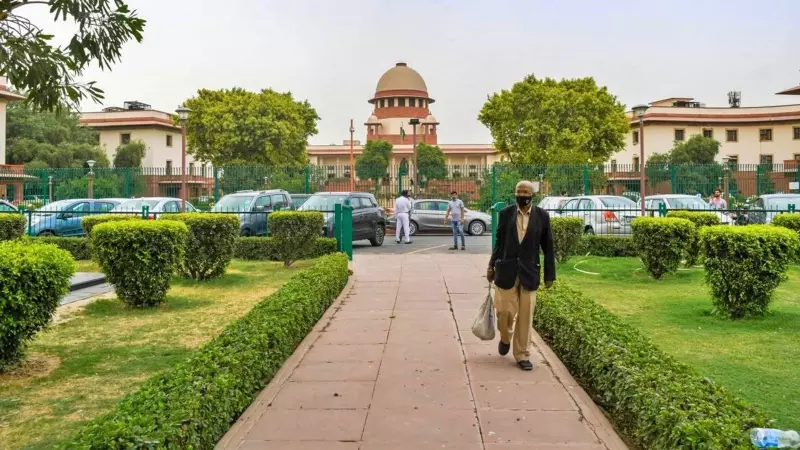
The Supreme Court of India has reserved its decision on a deeply emotional plea. A father sought permission to withdraw medical support for his son who has remained in a vegetative state for nearly thirteen years. The court's justices openly questioned their own authority in such a profound matter of life and death.
A Tragic Fall and a Long Medical Journey
The case centers on Harish Rana, now 32 years old. In August 2013, he suffered severe head injuries after falling from the fourth floor of an apartment building in Chandigarh. He has been dependent on artificial life support systems ever since that tragic accident. His condition has not improved over the long years.
Family's Legal Battle for Closure
Highlighting the hopelessness of his son's medical situation, the father approached the Delhi High Court. The family pleaded for legal permission to withdraw the medical facilities keeping Harish alive. They argued for an end to what they see as prolonged suffering without hope of recovery. However, the High Court turned down their plea, refusing to grant the requested permission.
Undeterred, the family moved the Supreme Court in 2024. They still failed to obtain any relief or favorable order at that time. Last year, they once again approached the apex court, renewing their heartfelt request for a decision.
Justices Grapple with a Moral Dilemma
Hearing the matter recently, a bench of Justices J B Pardiwala and K V Viswanathan expressed the gravity of the situation. "These are very delicate issues," Justice Pardiwala remarked during the proceedings. The justices acknowledged the weight of their daily responsibilities but posed a fundamental question about human limitation.
"We decide matters every day, but who are we to decide about someone's life? We are only mortals," the bench observed. This poignant statement underscores the ethical and legal complexities involved in cases concerning the withdrawal of life support. The court has now reserved its final verdict on this sensitive appeal.
The decision, when it comes, will set a significant precedent. It will address the painful intersection of medical ethics, personal autonomy, and legal boundaries in India.