

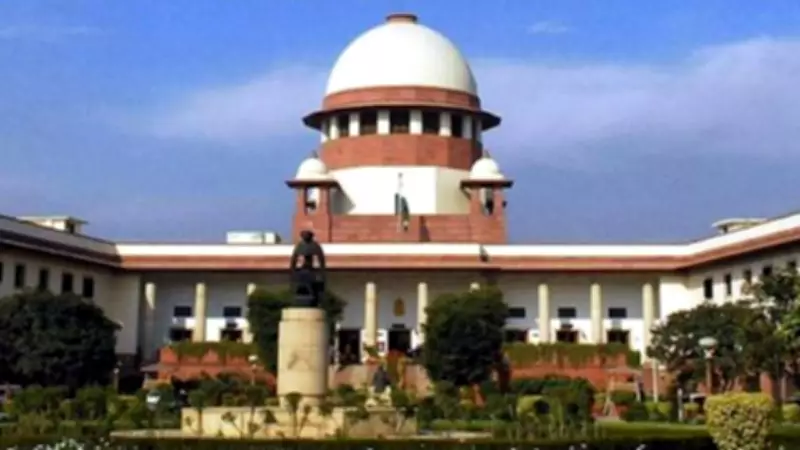
The Supreme Court on Monday strongly criticized the Orissa High Court and the state judiciary for imposing 'clean police station bail conditions' on tribal and Dalit villagers arrested in connection with violent protests against Vedanta's bauxite mining in Rayagada and Kalahandi. The apex court quashed these conditions, describing them as 'abhorrent, cruel, degrading, and unknown to law.'
Background of the Case
The High Court, while granting bail to Laxman Naik, had stipulated that he must clean the premises of Kashipur police station every morning between 6 am and 9 am for two months from the date of his release. The police station in-charge was directed to provide cleaning materials such as brooms, phenyl, and other items to the petitioner for this purpose.
Supreme Court's Strong Disapproval
Taking suo motu cognizance of news reports about such bail conditions imposed by Odisha courts, a bench comprising Chief Justice Surya Kant and Justice Joymalya Bagchi expressed deep disappointment. The bench stated that such orders negate the apex court's 75-year-long efforts to zealously guard life, liberty, dignity, and equality of every citizen.

'We are deeply disappointed and express our strongest disapproval of the manner in which the Odisha state judiciary has in fact regressed its mindset by imposing such onerous, degrading, and humiliating conditions which are ex-facie violative of human rights,' the bench observed.
Legal Implications
The Supreme Court emphasized that such conditions, far from advancing the cause of justice, strike at the dignity of the accused and proceed on the premise of their guilt, which is totally impermissible in law. The bench declared all such conditions or similar conditions imposed by the state judiciary while granting bail as null and void. It directed all Odisha courts to forthwith delete such bail conditions.
Assuming that such conditions were imposed inadvertently and without any pre-meditated bias, the bench noted that 'the nature of the bail condition is so abhorrent, cruel, degrading, and unknown to law that it carries the potential to cast a serious aspersion suggesting that Odisha judiciary is afflicted with caste-based bias.' The court further remarked that such conditions are never imposed on accused from privileged classes of society.
Directions and Compliance
The Supreme Court cautioned all trial courts and High Courts across the country never to impose such conditions while granting bail. It quashed the objectionable bail conditions imposed on the tribal and Dalit villagers in Odisha and stated that appropriate substitution of the conditions would be made without interfering with their liberty.
Odisha Advocate General Pitambar Acharya submitted that the prosecution will take steps to facilitate alteration of bail conditions. The Supreme Court directed the High Court's registrar general to file a compliance report within four weeks.






